




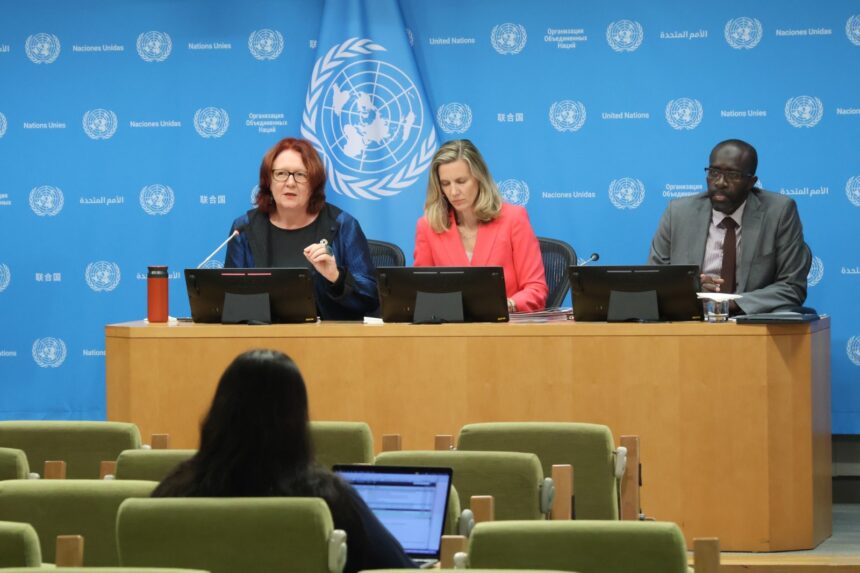
The latest Gender Snapshot report from UN Women and the UN Department of Economic and Social Affairs warns that gender equality is within reach but at risk, and that targeted investments could deliver large social and economic gains. The report finds that closing the gender digital divide alone could benefit hundreds of millions of women and girls, lift millions out of poverty, and add an estimated $1.5 trillion to global GDP. At the same time, rising backlash, shrinking civic space and cuts to gender programs risk reversing recent progress and leaving hundreds of millions of women and girls in extreme poverty by the SDG target date.
The report highlights important advances: girls are completing school at higher rates than ever before and maternal mortality has dropped markedly over recent decades. Countries that have adopted comprehensive measures to prevent and respond to violence show much lower rates of intimate partner violence, and women’s participation in climate negotiations has doubled. In recent years, nearly 100 new or reformed laws have been adopted to reduce discrimination.
Despite these gains, the Snapshot details growing threats. Conflict is increasingly deadly for women and girls, with a record number living within reach of violence. Food insecurity is disproportionately affecting women: tens of millions more female adults are moderately or severely food insecure compared with male adults. The report also warns that an unprecedented backlash against women’s rights, restricted civic space and declining funding for gender equality programs could erase hard-won gains.
Economic modelling in the report underscores the payoff from focused investment. Closing the gender digital divide would directly benefit hundreds of millions of women and girls, lift some millions out of poverty and produce an estimated $1.5 trillion boost to global economic output. Broader interventions—spanning care systems, education, green economy policies, labour markets and social protection—could reduce extreme poverty among women and girls by more than a hundred million and unlock trillions in cumulative economic returns.
The Gender Snapshot anchors a policy road map called the Beijing+30 Action Agenda, which sets out six priority areas for accelerated action: freedom from poverty, zero violence, equal power and leadership, climate justice, peace and security, and full participation in the digital revolution. The agenda stresses the importance of amplifying the voices of young women and girls and urges leaders to make concrete commitments and investments to scale up rights and services.
UN Women Executive Director Sima Bahous emphasized that prioritizing gender equality has propelled societies and economies forward and that targeted investments can transform lives and livelihoods. United Nations Under-Secretary-General for Economic and Social Affairs Li Junhua stressed that the costs of failing to achieve gender equality are immense, while accelerated action could deliver very large social and economic benefits.
The Gender Snapshot draws on more than 100 data sources to track progress across all 17 Sustainable Development Goals and is presented as the leading global evidence base on gender equality and the SDG agenda. UN Women and UN DESA say the findings point to clear, actionable priorities and call on governments, donors and civil society to reverse negative trends and scale up investments that deliver rights, equality and empowerment for all women and girls.