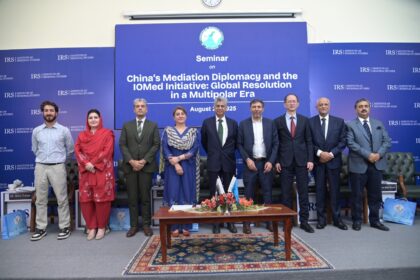




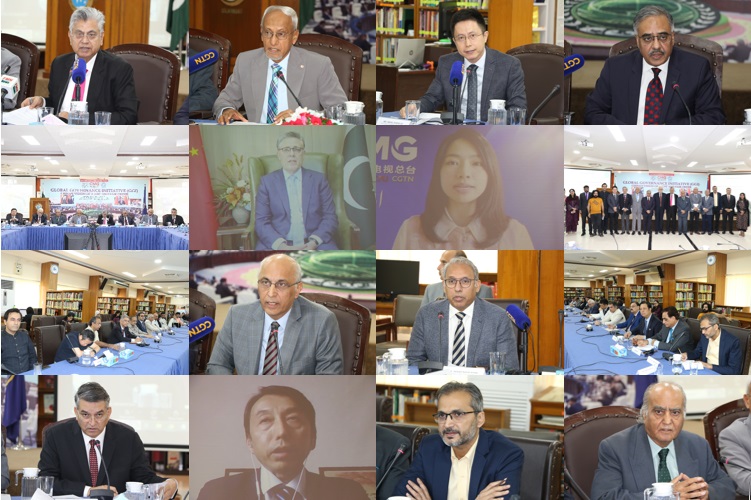
The China-Pakistan Study Centre at the Institute of Strategic Studies Islamabad, together with China Media Group, convened an international seminar to examine the Global Governance Initiative and its implications for Pakistan and the wider region. The gathering brought diplomats, scholars, media professionals and policymakers together to explore how the initiative can strengthen multilateral cooperation and practical outcomes.
Ms Wang Lei, Country Head of China Media Group, described the Global Governance Initiative as a continuation of China’s commitment to a just international order and a shared future for humanity. She emphasized the media’s role in building mutual trust, improving communication and deepening the China-Pakistan relationship as part of broader public diplomacy linked to the initiative.
Ambassador Sohail Mahmood, Director General of ISSI, noted that President Xi Jinping announced the Global Governance Initiative at the SCO Plus meeting in Tianjin on 1 September 2025 and called it a timely addition to global policy debates. He said the initiative, anchored in sovereign equality, respect for international law, multilateralism, a people-centered approach and results-oriented action, complements earlier Chinese proposals such as the Global Development Initiative, Global Security Initiative and Global Civilization Initiative. Ambassador Mahmood highlighted Pakistan’s support and suggested using platforms like the SCO and new mechanisms such as a ‘Friends of GGI’ grouping to build wider UN membership backing.
In his keynote address, Maj Gen (R) Fazle Elahi Akbar of FSDS Bangladesh framed the Global Governance Initiative as a corrective to unilateralism and institutional failure, arguing that its emphasis on inclusivity and practical action could better address crises where traditional mechanisms have struggled. He pointed in particular to the potential for more effective humanitarian relief and peace efforts in the Middle East, including Gaza and Palestine.
Ambassador Khalil Hashmi, Pakistan’s Ambassador to China, said the Global Governance Initiative resonates with Pakistan’s long-standing support for multilateralism, peaceful dispute resolution and more equitable global representation. He urged reform of the UN system, especially the Security Council, and called on international financial institutions to be more responsive to the needs of developing countries as part of a broader agenda of global governance reform.
Speakers from policy and research institutions reiterated the action-oriented nature of the initiative. Mr Shakeel Ahmad Ramay of AIERD described global governance as being at a crossroads and welcomed the Global Governance Initiative as a framework focused on common prosperity. Dr Akbar Nasir Khan emphasized victims’ rights and the need for collective platforms to ensure accountability, while Dr Xue Lei highlighted the role of institutions such as AIIB and BRICS Bank in delivering inclusive, results-driven solutions under the GGI framework.
Ambassador Moin-ul-Haque recalled Pakistan’s cooperation with China on prior initiatives and described the Global Governance Initiative as a practical framework to confront persistent global challenges, from conflict to climate injustice. Mr Wang Shengjie, Political Counsellor at the Chinese Embassy, underlined the need for equality, rule of law and better representation of the Global South, urging major powers to prioritise cooperation over confrontation on issues like climate change and artificial intelligence.
Chief Guest Murtaza Solangi, Spokesperson to the President of Pakistan, said the Global Governance Initiative reaffirms UN founding values and connects closely with Pakistan’s priorities in disaster relief, peacekeeping, climate resilience and technology. He proposed concrete cooperation areas such as early warning systems, second-phase CPEC collaboration and responsible use of AI to translate the initiative’s principles into tangible projects.
Ambassador Khalid Mahmood, Chairman Board of Governors ISSI, and Dr Talat Shabbir, Director of the China-Pakistan Study Centre, both stressed Pakistan’s readiness to work with China and other partners to advance the Global Governance Initiative. The seminar concluded with a shared emphasis on translating the GGI’s principles of sovereign equality, multilateralism and people-centered development into practical measures that reinforce the UN-centered multilateral system and support sustainable development goals and regional connectivity.