



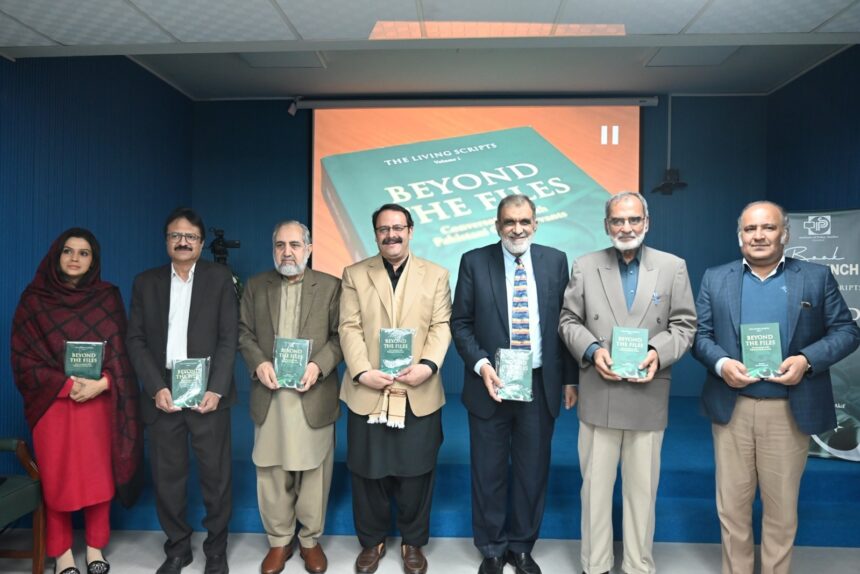
Islamabad, December 4 marked the launch of Beyond the Files: Conversations with Pakistani Civil Servants, an anthology that draws on oral history to illuminate the everyday realities of governance in Pakistan. The book is the first volume from The Living Scripts, the Institute of Policy Studies’ flagship oral history initiative that records the recollections of veteran civil servants who shaped policy, managed crises and navigated shifting political and administrative landscapes.
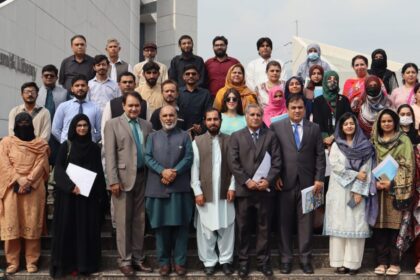
The launch, organised in collaboration with the National Book Foundation, brought together former cabinet secretaries, diplomats, academics and policymakers to reflect on how oral history can strengthen institutional memory and offer future public servants a truer view of administrative practice. Speakers included Prof Dr Mukhtar Ahmed as guest of honor, Khalid Rahman, Syed Abu Ahmed Akif the editor of the volume, Amb (r) Syed Abrar Hussain, Amb (r) Naghmana Hashmi, Dr Mujeeb Afzal and Murad Ali Mohmand.
Contributors at the event noted that oral history goes beyond personal memoirs by capturing multiple perspectives and the decision-making context that rarely appears in official records. The interviews compiled in Beyond the Files were described as a repository of lessons for both serving and aspiring bureaucrats, providing candid insights into governance, institutional constraints and the human elements of administration.
Panelists stressed the need for retired officials to document their experiences and for oral narratives to be supported by broader reference points so interpretations remain balanced. The discussion emphasised reading, reflection and documentation as essential habits for national development, urging civil servants to overcome reluctance to write and to share both successes and difficult episodes so vital lessons are preserved.
Khalid Rahman highlighted that writing and documentation should reflect a distinctly Pakistani mindset and not merely adopt external frameworks. He called for truth-telling that is fair and constructive, arguing that an honest domestic narrative is crucial for informed policymaking and a realistic foreign policy rooted in local experience and on-ground realities.
Organisers said the anthology aims to foster a stronger reading culture among youth and to make oral history a mainstream source for researchers and practitioners interested in Pakistan’s administrative evolution. By preserving these first-hand accounts, the project seeks to offer a richer, more nuanced understanding of the civil service and its role in national development.