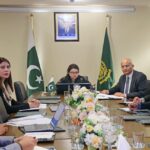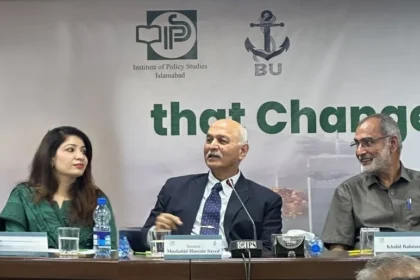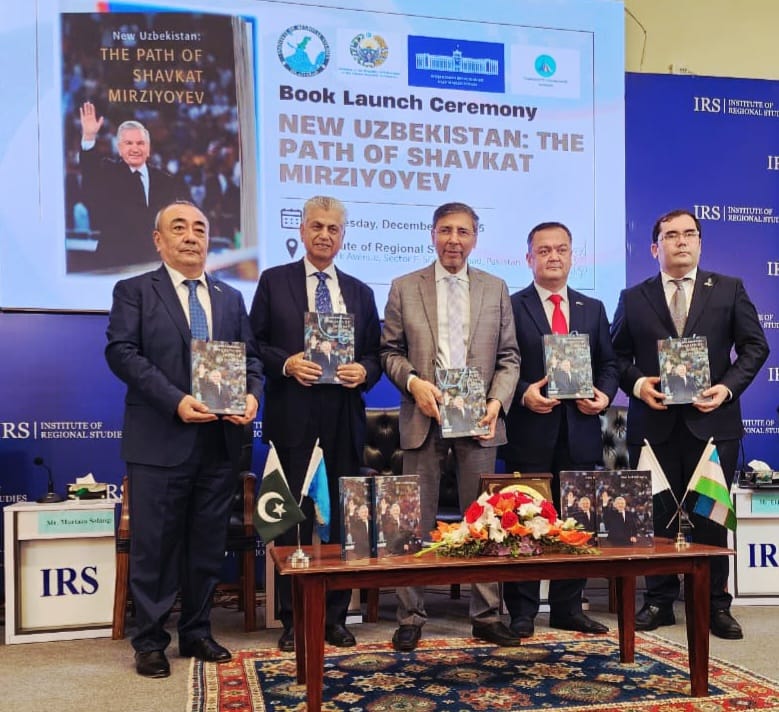
The Institute of Regional Studies in Islamabad, together with the Embassy of Uzbekistan, hosted a book launch for New Uzbekistan: The Path of Shavkat Mirziyoyev that drew diplomats, policymakers, scholars and civil society to discuss Uzbekistan reforms and growing Pak–Uzbek cooperation.
Ambassador Jauhar Saleem, President of the Institute of Regional Studies, described the book as an intellectually rich account of Uzbekistan’s reform trajectory and called the event a meaningful diplomatic and intellectual moment between two nations tied by shared faith, history and culture.
Ambassador Alisher Tukhtaev, Uzbekistan’s envoy to Pakistan, said the country has entered a new era of growth with comprehensive reforms across governance, economy, science and development. He pointed to increased public confidence under President Shavkat Mirziyoyev and cited tangible economic gains, including GDP rising from USD 115 billion to USD 140 billion and foreign exchange reserves growing from USD 48 billion to USD 59 billion.
The ambassador highlighted practical steps strengthening bilateral ties, noting visa facilitation through e-visa regimes for Pakistani nationals and expanded direct flights between Tashkent and Islamabad and Lahore, with Karachi scheduled to be added next year. He also referenced trade growth, with volumes expected to rise from USD 404 million in 2024 to USD 450 million this year, underscoring the momentum in Pak–Uzbek partnership.
Hassan Irmatov, a member of the Senate Committee of Uzbekistan, called the book a leadership-focused analytical work offering insights into modern governance and state transformation. He recalled earlier launches in the United States and at the United Nations, saying the Islamabad event marks an important extension of the book’s international outreach and reflects strengthening ties with Pakistan.
Eldor Tulyakov, Executive Director of the Development Strategy Center, outlined the public administration changes in Uzbekistan over the past eight years, emphasizing that governance reforms have redefined the state–citizen relationship by placing human dignity at the heart of policymaking. He highlighted transparency, participatory budgeting, institutionalized accountability and service-oriented governance as central pillars of the reform agenda.
Murtaza Solangi, spokesman to the President of Pakistan and former information minister, stressed deep cultural, historical and geographic affinities between Pakistan and Uzbekistan and described the reform drive as a “third renaissance” rooted in openness, innovation and a youthful population. He urged greater regional connectivity and cooperation in education, agriculture, technology, culture and trade to realise the full potential of Pak–Uzbek relations.
The event was attended by senior diplomats, government officials, scholars, journalists and students, and it reinforced Islamabad’s interest in Uzbekistan reforms and the expanding partnership between the two countries.