



Under the Prime Minister’s Digital Pakistan vision, the Public Procurement Regulatory Authority has introduced a package of reforms to align Pakistan’s public procurement with international standards, with ePADs at the centre of the transformation as it moves into the next phase with ePADs 2.0.
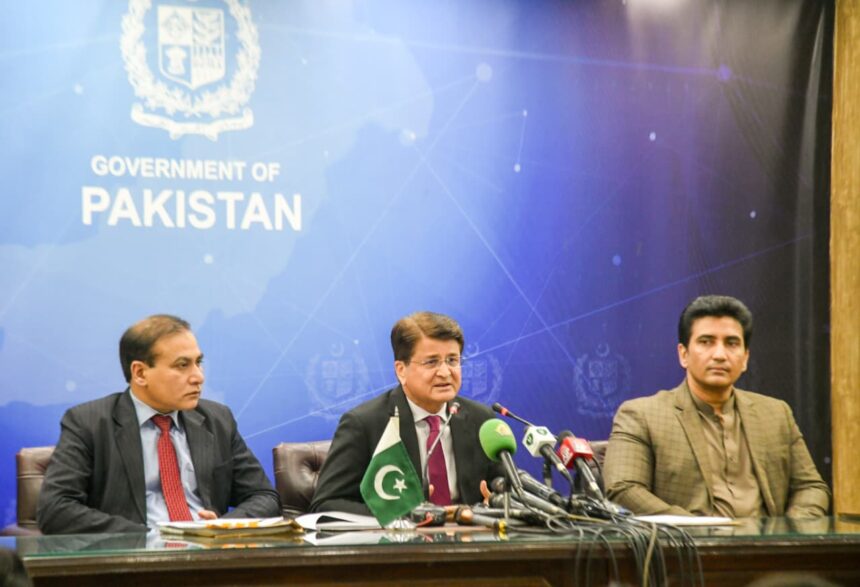
Managing Director Hasanat Ahmed Qureshi told reporters that the reform programme launched in 2024 followed reviews by international and local experts and received the Prime Minister’s approval. The reform agenda combined mandatory e-procurement rollout, legal amendments, institutional restructuring and extensive training to strengthen procurement governance.
The mandatory implementation in the federal government and three provinces helped scale adoption quickly. To date 9,846 government entities, 600 foreign firms and some 43,000 suppliers have registered on the platform. In the last financial year ePADs processed PKR 1,408.58 billion in procurement across 526,271 transactions.
ePADs has been fully integrated with key government systems including the Federal Board of Revenue, NADRA, the Securities and Exchange Commission of Pakistan, the Pakistan Engineering Council, the Financial Accounting and Budgeting System, provincial revenue authorities and the Drug Regulatory Authority. Special dashboards have been provided for the Auditor General, NAB, the Pakistan Engineering Council and the Competition Commission to support oversight.
Officials say these institutional links and dashboards make it possible to verify every transaction, enforce compliance at each stage and improve accountability across the procurement lifecycle.
The platform has also delivered measurable gains in competition and efficiency. ePADs reduced opportunities for collusion and increased participation in open bidding to an average of five to seven bidders compared with two to three under traditional methods. Small procurements and quotations are now recorded on the platform, complaints are resolved through built-in mechanisms, and the system blocks participation by blacklisted firms while flagging procurement delays.
Transparency measures include live online broadcasting of bids for goods and services valued above PKR 500 million and construction tenders exceeding PKR 1 billion. According to PPRA, this has led to improved rule compliance and clearer audit trails.
The rollout plan sets ePADs 2.0 to go live at the federal level in January 2026, expand to Gilgit-Baltistan and Azad Jammu and Kashmir in February, and complete provincial implementations by March. Monitoring and analytical reporting will begin in July, donor-funded procurement migration is scheduled by September 2026, an online Procurement Academy is planned for October and implementation of Open Contracting Data Standards is targeted for December.
Legal reforms are in final stages, including proposed amendments to the PPRA Ordinance 2002, preparation of the Public Procurement Rules 2025 and revision of bidding documents. The new framework envisages an independent complaints redressal mechanism, mandatory e-procurement and e-disposal, establishment of procurement cells within government entities and professionalisation of procurement through accredited training.
Capacity building has been a core pillar of the reform. Over 10,000 officers have received training so far, with 2,499 officials and supplier representatives participating in 2024-25 alone. Leading universities including NUST, LUMS, IBA and Air University have supported PPRA training efforts, and a standardised framework for training modules and certification of procurement professionals is under development.
Institutional changes at PPRA include merit-based recruitment of market specialists, procurement experts and IT professionals, creation of a pool of independent experts for oversight, establishment of procurement cells in contracting agencies, and the launch of an ePADs training centre alongside a 16-hour helpdesk to assist agencies and suppliers.
Hasanat Ahmed Qureshi said the regulatory and digital reforms are designed to remove ambiguity, promote transparency, reduce corruption, improve efficiency and boost competition, strengthening Pakistan’s procurement governance and international reputation.