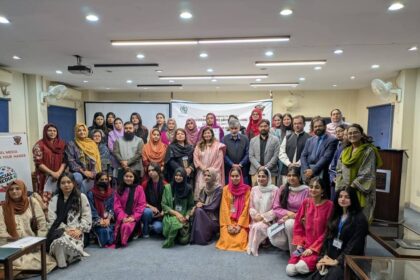





Dr Shahzad Khan, Vice Chancellor of the Health Services Academy, has warned that unplanned population growth is now the central driver behind many of Pakistan’s social and environmental challenges. He says the strain on health services, clean water, nutrition and urban planning stems directly from the pace of population growth and inadequate family planning coverage.
Dr Shahzad Khan detailed that Pakistan sees about 12.8 million pregnancies each year, roughly half of which are unwanted. He noted that around 3.8 million abortions are attempted annually, many carried out in unsafe conditions that endanger women’s health. The country also faces one of the highest stillbirth burdens globally, with about 700,000 stillbirths reported each year. He highlighted that roughly 6.5 million new babies are added to the population every year—equivalent to the population of a large city or a country like New Zealand—while basic services remain insufficient even for existing children.
According to Dr Shahzad Khan, a key obstacle is the lack of reliable family planning access, especially in rural areas, compounded by frequent stock-outs and limited contraceptive options. He emphasized that empowering women with the right to choose and ensuring timely, quality family planning services can significantly reduce unwanted pregnancies and unsafe abortions, and ease pressure on public services.
Dr Shahzad Khan also dismissed the misconception that population policy conflicts with religious guidance, citing the Quranic recommendation for breastfeeding for two years as a traditional and scientific basis for birth spacing. He pointed out that modern medical guidance similarly supports at least a two-year recovery period between pregnancies for the health of the mother and child.
While he welcomed the merger of the population department with the health department as a positive step that has improved service delivery, Dr Shahzad Khan regretted that family planning still lacks the priority given to other health sectors. He insisted that the state’s primary responsibility is to provide basic facilities and that policy focus should be on slowing the pace of population growth rather than pursuing population reduction.
Finally, he called on media outlets to run sustained, serious coverage on the population issue to raise public awareness and give policymakers the factual basis needed to make informed decisions about family planning and related services.