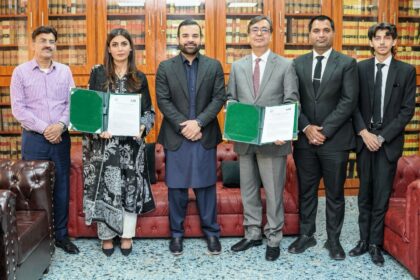




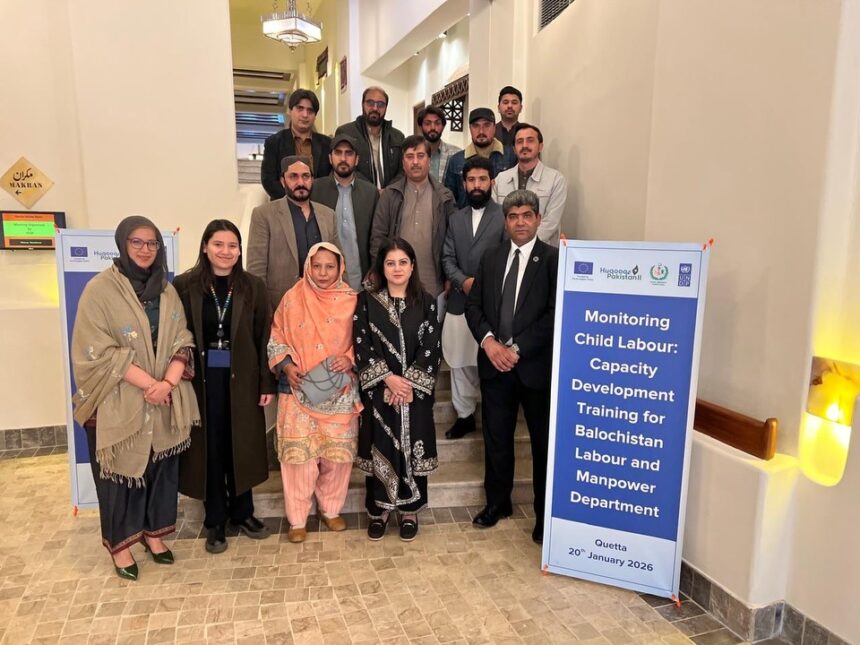
The National Commission for Rights of Children, in partnership with UNDP Pakistan under the Huqooq-e-Pakistan II Project financed by the European Union, held a focused capacity development training for the Balochistan Labour and Manpower Department to enhance child labour monitoring in the private sector.
The programme concentrated on strengthening the skills of labour inspectors and enforcement officials to adopt child-sensitive inspection approaches, improve documentation and evidence collection, and ensure prompt coordination and referral of children engaged in labour to protection and rehabilitation services.
Training content was tailored to Balochistan’s context, highlighting risks in mining, automobile workshops, home-based work and other informal sectors prevalent across the province. Sessions covered the applicable child labour legal framework, identification of hazardous and non-hazardous work, and inspection procedures for informal and hard-to-reach settings to make child labour monitoring more effective on the ground.
Participants discussed coordination mechanisms among labour authorities, social welfare, child protection actors and district administration to ensure referrals are timely and survivors receive appropriate support. The role of robust labour inspections in promoting business and human rights standards and meeting Pakistan’s GSP+ commitments was also emphasised throughout the training.
Representing the Commission, Advocate Abdul Hayee, Member Balochistan, underlined the NCRC’s commitment to continued capacity building and close collaboration with provincial authorities to strengthen enforcement and advance efforts toward the elimination of child labour in all its forms.