



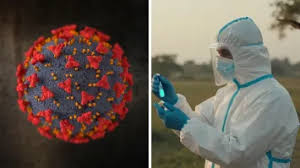
The National Institute of Health Islamabad has procured 100 testing kits as part of an accelerated response to confirmed Nipah cases in neighbouring India, and federal authorities have tightened border screening across airports, seaports and land crossings. Samples from any suspected case identified at points of entry will be sent to the NIH Islamabad for laboratory confirmation as Pakistan steps up its Nipah screening efforts.
Health officials said throat and nasal swabs, blood, cerebrospinal fluid or urine will be collected under strict biosafety protocols and tested using real time RT PCR, the gold standard for detecting Nipah virus infection. All specimens must be transported under an unbroken cold chain and handled with enhanced biosafety measures to protect laboratory staff and preserve diagnostic accuracy.
Border Health Services Pakistan, operating under the Ministry of National Health Services Regulation and Coordination, has ordered one hundred percent screening of arriving and transit passengers, crew, drivers and support staff. Thermal screening, clinical assessment and verification of travel and transit history for the preceding twenty one days are mandatory, and no individual will be permitted entry without clearance from border health authorities. Special vigilance is being directed for travellers from or transiting through affected or high risk areas, with instructions to document and report any false declarations.
Screening teams have been instructed to remain alert for early signs of infection including fever, headache, respiratory symptoms and neurological changes such as confusion or altered consciousness. Any person meeting the suspected case definition will be isolated at the point of entry, managed under infection prevention and control protocols and referred to a designated isolation facility or tertiary care hospital for further care.
An advisory from the NIH’s Centers for Disease Control confirmed at least five Nipah cases in West Bengal, including infections among healthcare workers in Kolkata, and warned that the virus carries a case fatality rate of roughly forty to seventy five percent. Authorities note that Nipah can cause severe respiratory illness and fatal encephalitis and that the incubation period typically ranges from four to fourteen days but can extend up to forty five days, raising concerns about silent cross border transmission.
The NIH has directed provincial health departments to identify at least one tertiary care hospital or infectious diseases unit for safe triage, isolation and clinical management of suspected patients. Provinces are also required to ensure availability of trained staff, adequate personal protective equipment including N95 respirators, and to place rapid response teams on active standby for case investigation and contact tracing as part of nationwide Nipah screening and preparedness measures.
There is currently no licensed vaccine or specific antiviral treatment for Nipah virus infection, and clinical management remains largely supportive. Severe cases often require intensive care and mechanical ventilation, and the clinical effectiveness of ribavirin remains inconclusive and is not routinely recommended.
Public health emergency operations centres across the country have been placed on watch mode with mandatory daily case or nil reporting from all points of entry. Federal officials emphasised that any lapse in surveillance or infection control will be treated as serious negligence, and while the World Health Organization assesses the risk of wider international spread as low for now, authorities stress that early detection through rigorous Nipah screening and preparedness is essential to prevent delayed response.