



Federal Minister for National Heritage and Culture Division Aurangzeb Khan Khichi on Wednesday reaffirmed Pakistan’s steadfast support for the Kashmir cause, calling it a grave humanitarian and international concern that must not be forgotten while commending the passion of young people in keeping the Kashmir narrative alive.
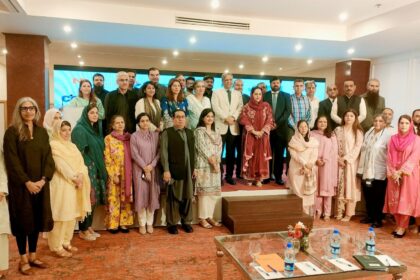
The event was organised by the Pakistan Academy of Letters under the National Heritage and Culture Division to mark the upcoming Kashmir Solidarity Day. The intellectual and literary gathering, titled The Kashmir Case: In the Voice of the Young Generation, showcased how cultural platforms can sustain and amplify the Kashmir narrative.
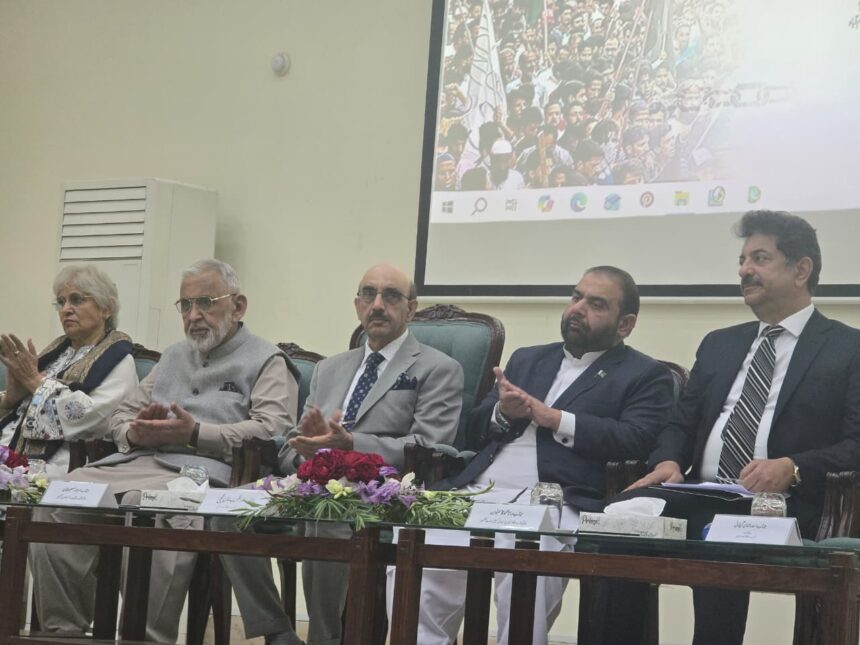
The programme at the Faiz Ahmed Faiz Auditorium was presided over by former President of Azad Jammu and Kashmir and former ambassador Sardar Masood Khan. Special guests included Federal Minister and Chairman of the Parliamentary Committee on Kashmir Rana Muhammad Qasim Noon, Kashmiri leader and scholar Dr Samiullah Malik, and Federal Secretary National Heritage and Culture Division Asad Rehman Gilani.
The ceremony opened with the national anthem and a recitation from the Holy Quran by Hassan Ahmed, a student of Punjab Group of Colleges, followed by a Naat presented by Jibran Haider. Students from the Government Postgraduate College H-9 staged a dramatic presentation titled “The Kashmir Case,” and participants from Punjab Group of Colleges joined the discussions, reflecting youth engagement in the cause.
Aurangzeb Khan Khichi said the government continues to raise the Kashmir issue forcefully at international forums, particularly the United Nations, and urged the younger generation to sustain intellectual and cultural efforts to keep the Kashmir narrative visible at home and abroad. Asad Rehman Gilani described the Kashmir issue as part of Pakistan’s cultural responsibility and stressed ongoing literary and intellectual work to preserve its memory.
Dr Samiullah Malik traced the historical and international dimensions of the dispute and paid tribute to the sacrifices of the Kashmiri people, urging youth to develop critical thinking and present the Kashmir narrative to global audiences. Rana Muhammad Qasim Noon likened the prolonged suffering in Kashmir to that of Palestine and proposed integrating the Kashmir struggle into the national curriculum so future generations understand its significance. In his presidential address, Sardar Masood Khan said the Kashmiri struggle has become integral to history and called for renewed resolve to present the issue on the world stage.
Dr Najeeba Arif, chairperson of the Pakistan Academy of Letters, said the event aimed to give young people a platform to express their views and keep the Kashmir narrative alive beyond political debate, through literature and culture. PAL publications were distributed as souvenirs to participating students in recognition of their contributions to the discussion.