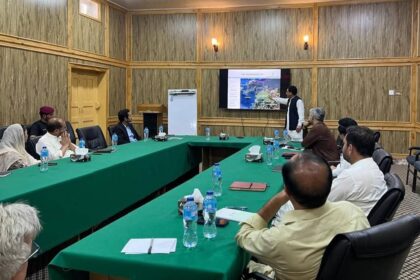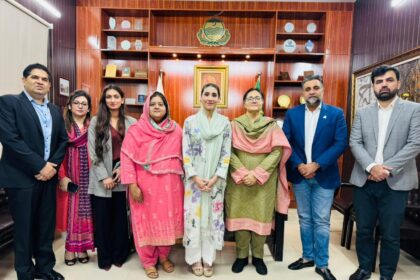




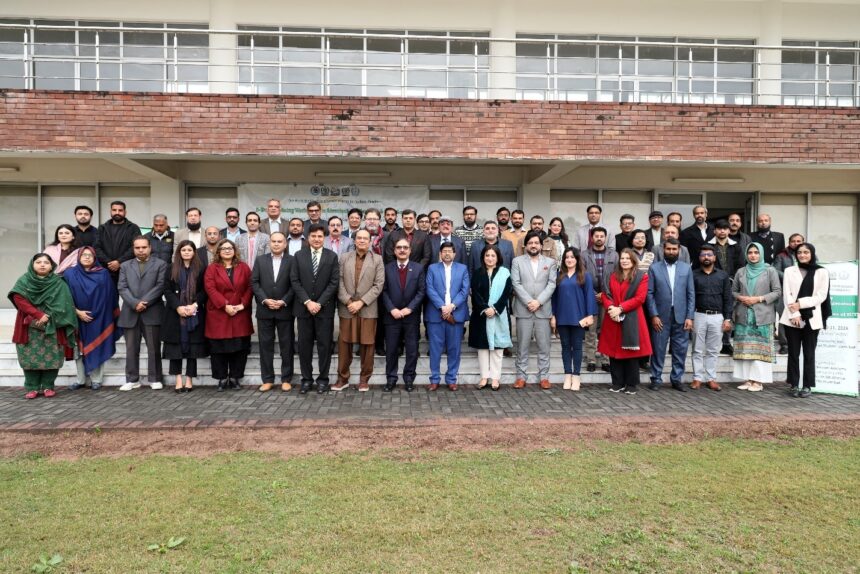
Health Services Academy, together with Pak One Health Alliance and the National Agricultural Research Council, held a two-day capacity-building training for the livestock and agrifood sector of Islamabad Capital Territory under the One Health Workforce Development project.
Prof. Dr. Shahzad Ali Khan, Vice Chancellor of Health Services Academy, said pandemics and outbreaks often arise at the human–animal–environment interface and stressed that an integrated One Health approach is essential for early detection, prevention and coordinated response. He added that ‘outbreak response cannot be achieved in isolation’ and that collaboration between human health, livestock, agriculture and environmental sectors forms the foundation of national health security.
The training drew frontline livestock personnel from the ICT Livestock Department, including veterinary officers, field assistants and technical staff, who are directly involved in disease reporting, vaccination campaigns, surveillance and response operations. These field teams play a critical role in detecting and containing zoonotic events before they escalate.
Prof. Dr. Tariq Mahmood Ali, National Coordinator for One Health, outlined the project goals and highlighted that nearly 70% of emerging infectious diseases in humans originate from animals. He emphasized that strengthening the skills of livestock and agrifood professionals is vital to establishing an effective early warning and response system, noting that ‘a trained workforce and integrated surveillance mechanism are key to timely detection and containment of zoonotic threats.’
The program addressed major One Health challenges in Pakistan and covered epidemiology, fundamentals of disease transmission, infection prevention and control, rapid response team functioning, risk analysis and communication, emergency planning as well as One Health surveillance and epidemic intelligence. Interactive sessions and group exercises were incorporated to ensure practical understanding and immediate field-level application of One Health principles.
Under the project, Health Services Academy has already trained about 100 professionals from multiple sectors, contributing to a more skilled and coordinated workforce for pandemic preparedness. The initiative aims to build district-level resilience and enhance intersectoral coordination so Islamabad and surrounding districts can respond more effectively to any outbreak.
Organizers concluded by reaffirming that sustained investment in workforce development, surveillance integration and multisectoral collaboration is essential to safeguard Pakistan against future epidemics and pandemics and to make the One Health approach an operational reality across sectors.