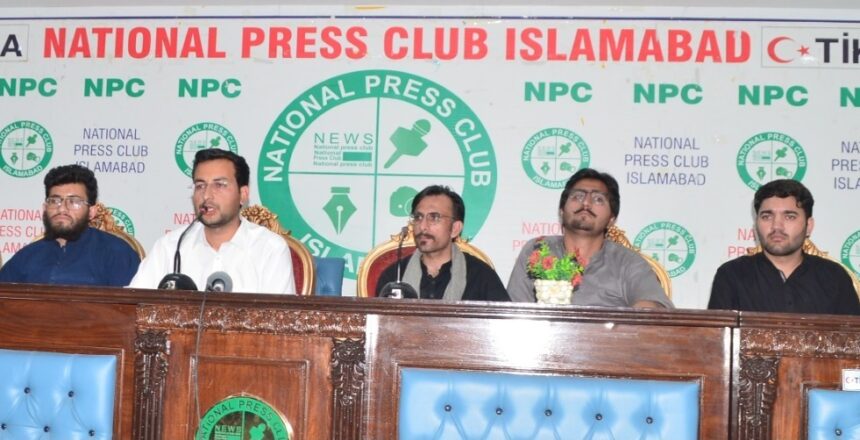
Students from former FATA and Balochistan addressed the media at the National Press Club Islamabad, demanding that the Higher Education Commission immediately restore the 333 medical seats previously reserved for their regions. They warned that slashing the quota has left many aspirants without a viable route to pursue medical higher education, especially since there are still no medical colleges in the tribal districts.
Speakers including Shaukatullah, Hizbullah Wazir, Asad, Allahyar and Rahatullah said the HEC quota for medical college admissions this year has been reduced from 333 to just 121 seats, effectively eliminating crucial opportunities for students from underserved areas. They pointed out that Khyber Medical University announced 113 seats and Azad Jammu and Kashmir 8 seats, while other allocations that existed last year have not been provided this year.
The students noted that KMU had allocated 149 seats last year, Sindh had offered 68 seats previously but has not announced any this year, and Balochistan had provided 24 seats last year but nothing so far. They also criticized the University of Health Sciences Punjab for appearing to violate HEC policy by ignoring agreed criteria during seat allocation, which has increased tensions among applicants.
According to the students, the quota mechanism is essential because, beyond HEC seats, there is virtually no effective channel for youth from FATA and Balochistan to secure medical education. They recalled that a 2018 policy envisaged doubling the quota to address regional disparities, but lamented that the commitment was never implemented.
The delegation urged the HEC to reinstate the full 333 medical seats immediately so that students from FATA and Balochistan can continue their studies without disruption and contribute as trained professionals to their communities and the nation. They appealed for a transparent, merit-based allocation process that protects the educational rights of marginalized regions and prevents further disputes among applicants.