



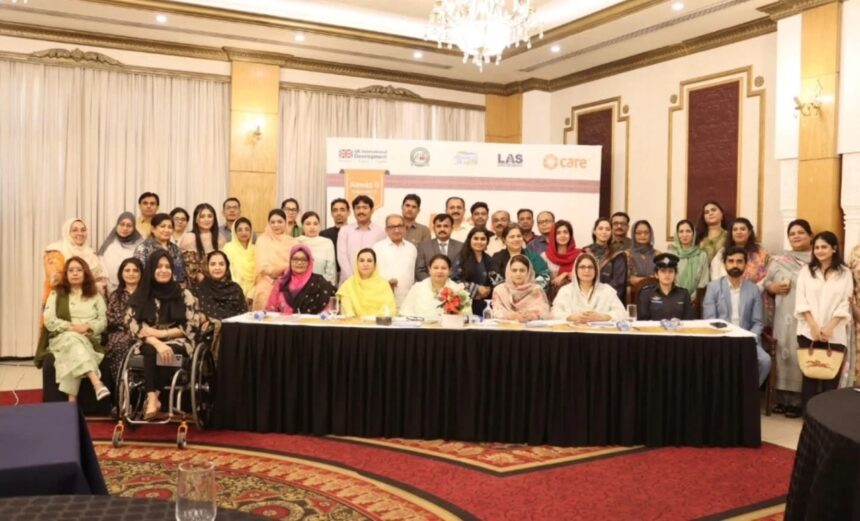
A provincial policy dialogue in Karachi has underscored persistent implementation gaps in the Sindh Domestic Violence (Prevention and Protection) Act, 2013, as stakeholders call for urgent reforms to protect survivors. Organized by the Sindh Commission on the Status of Women in collaboration with the Legal Aid Society under the Aawaz II Programme, the event brought together parliamentarians, government officials, civil society and representatives of marginalized communities to examine barriers faced by survivors across Sindh.
Participants highlighted that while the law provides a comprehensive framework, survivors continue to encounter obstacles when reporting abuse, accessing protection and navigating weak referral systems. Evidence from Aawaz II engagements points to low legal awareness in rural areas, stigma and fear that prevent reporting, and fragmented coordination among institutions, all of which undermine effective response to Sindh domestic violence.
A policy paper titled Implementing the Sindh Domestic Violence (Prevention and Protection) Act, 2013: From Law to Protection outlined a set of urgent reforms. Recommendations include legislative amendments, stronger institutional coordination, improved FIR procedures, better referral systems, capacity building for justice actors and increased investment in survivor-centred protection services to close current gaps.
Advocate Maliha Zia of the Legal Aid Society presented a Domestic Violence Protection Blueprint calling for strengthened One-Stop Protection Centres, improved policing practices, establishment of functional district protection mechanisms and coordinated service delivery to ensure timely support for survivors across the province.
Chairperson Sindh Commission on the Status of Women Rozina Aman Brohi warned that the law has not been implemented in its true spirit over the past 13 years and urged expansion of protection centres, reinforcing women police stations, boosting awareness budgets and targeted efforts to empower rural women so they can access protection and justice.
In her remarks, Provincial Minister Shaheen Sher Ali noted that legal awareness is not reaching rural and marginalized communities, particularly because key materials are unavailable in Urdu and Sindhi. She proposed mobilising Lady Health Workers for door-to-door awareness campaigns and stressed that empowering girls remains central to preventing domestic abuse.
Organisers acknowledged support from CARE International and the Foreign, Commonwealth and Development Office through the Aawaz II Programme and emphasised the need for survivor-centred approaches, improved coordination among service providers and accountability mechanisms at provincial and district levels to tackle Sindh domestic violence effectively.
The dialogue concluded with a renewed commitment from policymakers, civil society and development partners to strengthen coordination, accountability and survivor-focused responses across Sindh so that the law translates into meaningful protection for those at risk.