



National Security and Economy in Pakistan
Author: Dr. Nadeem Iqbal, Professor National Skills University Islamabad Pakistan
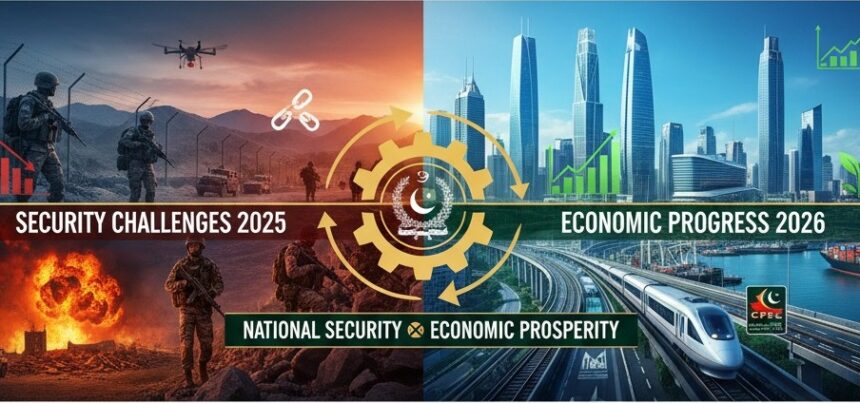
National security and the economy are deeply intertwined in Pakistan, where external threats and internal stability directly influence economic progress, and vice versa. Pakistan’s National Security Policy (2022-2026) recognizes economic security as the core of national security, shifting from a purely geo-strategic focus to a geo-economic vision. This approach acknowledges that a strong economy provides the foundation for defense capabilities, human security, and resilience against both traditional and non-traditional threats. In recent years, Pakistan has faced a complex security landscape, including heightened militant activities in 2025 with over 1,500 violent incidents and significant casualties, alongside border tensions. These challenges have strained resources, yet the policy emphasizes that sustainable development and economic stability are essential to counter vulnerabilities like terrorism, hybrid warfare, and climate risks. Without addressing economic fragility, national security remains compromised, as poverty, unemployment, and inequality can fuel internal unrest and weaken state institutions.
Pakistan’s economy has shown signs of stabilization in recent times, but persistent security concerns continue to hinder robust growth. In FY2025, real GDP growth stood at around 2.68%, supported by falling inflation (down to low single digits in some months), a current account surplus driven by remittances and exports, and improvements in foreign exchange reserves. Initiatives like the China-Pakistan Economic Corridor (CPEC) have boosted infrastructure and energy sectors, enhancing connectivity and potential trade routes. However, security incidents disrupt economic activities, damage infrastructure, and deter foreign investment. High defense spending, which increased notably in recent budgets to address threats from eastern and western borders, often crowds out development expenditure on education, health, and infrastructure. This “guns versus butter” dilemma highlights how resources diverted to security limit long-term economic investments, perpetuating cycles of debt, fiscal deficits (around 5.4% of GDP in recent estimates), and reliance on external financing from institutions like the IMF.
The interlinkage between national security and economy is evident in how instability affects investor confidence and growth prospects. Terrorism and militancy in regions like Khyber Pakhtunkhwa and Balochistan not only cause direct human and material losses but also raise risk perceptions, leading to capital flight and reduced industrial activity. External shocks, such as regional conflicts impacting oil prices, further pressure the import-dependent economy and current account. Conversely, economic weaknesses—such as a narrow tax base, socio-economic inequalities, and geographic disparities—exacerbate security challenges by creating fertile ground for extremism and unrest. Pakistan’s National Security Policy identifies non-traditional threats like water scarcity, food insecurity, and cyberattacks as critical, all of which are amplified by economic vulnerabilities. A resilient economy would enable better funding for counter-terrorism, border management, and social programs that promote national cohesion and reduce grievances.
To strengthen both domains, Pakistan must prioritize integrated reforms that treat economic revival as a national security imperative. This includes broadening the tax base, improving governance to reduce corruption, enhancing human capital through education and skills development, and fostering private sector-led growth. Strengthening regional cooperation, fully leveraging CPEC for economic dividends while ensuring project security, and investing in climate resilience can build buffers against shocks. Diplomatic efforts to de-escalate tensions with neighbors would free up resources for development. Public-private partnerships and export-led strategies could accelerate growth, creating jobs and reducing poverty, which in turn diminishes internal security threats.
Pakistan’s future hinges on recognizing that national security and economic prosperity are mutually reinforcing. While security challenges in 2025 tested resilience, the cautious optimism entering 2026—marked by stabilizing indicators and institutional confidence—offers a window for recalibration. By placing economic security at the heart of national strategy, implementing structural reforms, and balancing defense needs with development, Pakistan can build a more secure and prosperous nation. This holistic approach will not only safeguard territorial integrity but also ensure sustainable growth, benefiting its large population and positioning the country as a stable regional player in an uncertain global landscape.