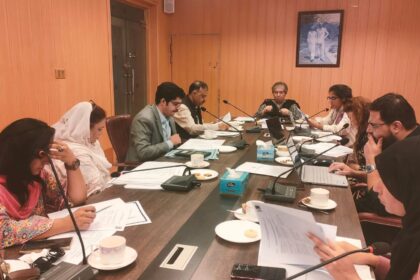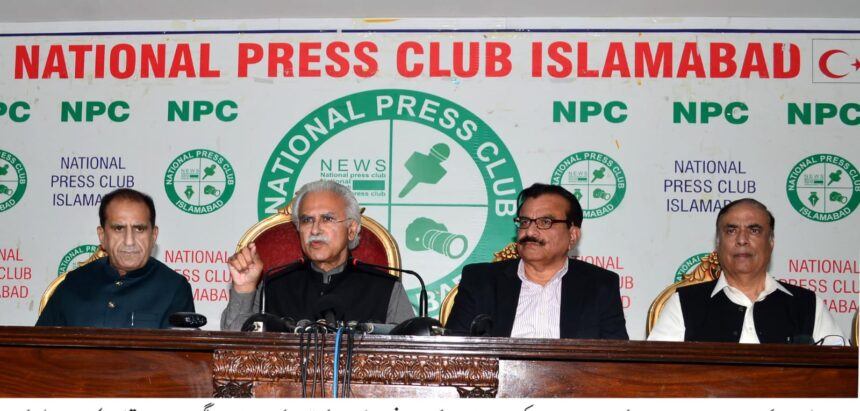
Health experts at a National Press Club briefing warned that Pakistan is facing a fast-growing HIV crisis driven by systemic weaknesses in healthcare practice and governance. Former special assistant to the prime minister on health Dr Zafar Mirza joined epidemiologists and public health advocates in calling for immediate action to stop preventable transmission, noting that the problem now extends beyond traditional high-risk groups.
Speakers pointed to unsafe medical practices, including reports of syringe reuse in some facilities and inconsistent blood screening, as central drivers of the trend. Cases reported in Taunsa and Karachi were cited as examples of gaps in infection control that could have been avoided with stronger regulation and oversight.
Epidemiologists such as Dr Quaid Saeed and Dr Rana Jawad Asghar recalled multiple outbreaks since 2008, most notably the Ratodero crisis in 2019 that affected many children. They stressed that without greater accountability and sustained regulatory enforcement similar outbreaks are likely to recur.
Experts highlighted the wider context of blood-borne infections in Pakistan, noting the country already carries a heavy hepatitis C burden with an estimated 10 million people affected. They warned that weaknesses in blood bank regulation and screening protocols increase risks for HIV Pakistan and other infectious diseases.
At the briefing attendees reviewed programmatic and funding concerns, including the fact that Pakistan has received roughly $1.1 billion from the Global Fund since 2003. Participants cited a June 2025 Office of the Inspector General report that found weaknesses in programme management, frequent leadership changes and insufficient domestic financial commitment, all of which undermined continuity and performance.
Delegates shared current epidemiological figures showing an estimated 370,000 people living with HIV in Pakistan, with only about 21 percent aware of their status and roughly 16 percent receiving treatment. Experts also said around 1,800 children become infected each year, highlighting the urgent need for improved prevention.
Nayab Majeed, an HIV survivor, described the social and practical challenges patients face, from stigma to barriers in accessing care, and urged greater public awareness and support systems. Policy recommendations from the meeting included strengthening infection control, tighter regulation of blood banks, wider adoption of safer medical equipment and enhanced monitoring and transparency in the use of funds.
Speakers concluded that without prompt policy action, improved governance and stronger healthcare safeguards Pakistan will struggle to control the spread of HIV Pakistan and other blood-borne infections, placing further strain on communities and the health system.