



The Sustainable Development Policy Institute convened a consultation in Islamabad on Heat and Drought Adaptation Strategies in Pakistan, where experts urged immediate, locally driven responses to rising heatwaves and drought risk. Speakers warned that escalating climate extremes threaten long-term development gains and demand coordinated policy and implementation at provincial and district levels.
Zainab Naeem, Head of Ecological Sustainability and Circular Economy at SDPI, highlighted Pakistan’s growing vulnerability to climate shocks and stressed proactive preparedness in the face of global warming trends and abnormal ocean temperature rises noted by the World Meteorological Organization. She said that while heat policies emerged after the 2015 catastrophe, most lack the localized implementation frameworks and enforcement needed for effective heatwave adaptation.
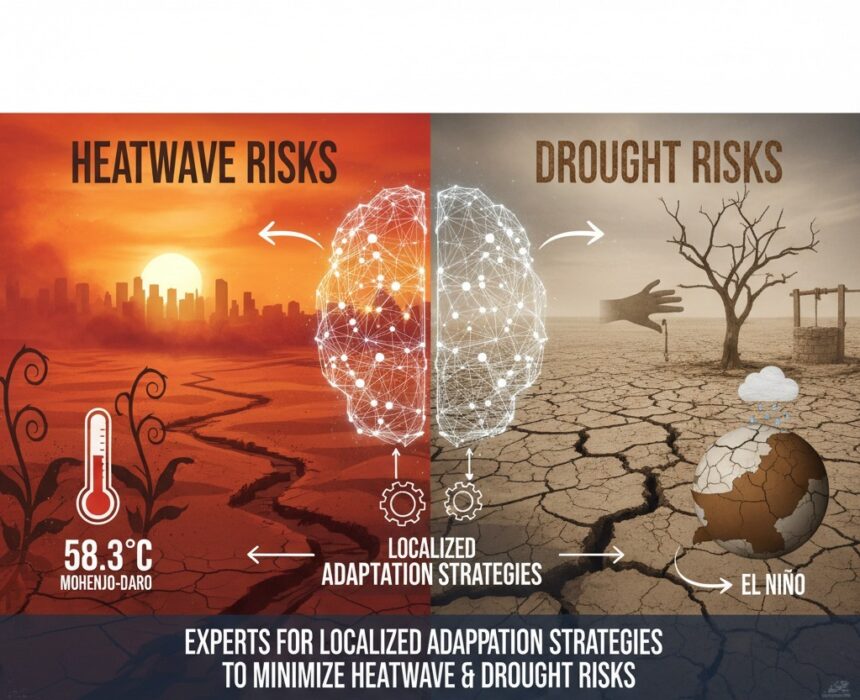
Arif Goheer, Executive Director of the Global Change Impact Studies Centre, described a marked increase in the frequency and intensity of climate extremes since 2015 and cited more than two thousand heat-related deaths in recent years. He called for integrated heat-resilient crops, improved water management and coordinated drought response plans, and warned that institutions such as the National Disaster Management Authority require stronger coordination and implementation capacity. Record temperatures, including an observed 58.3°C in Mohenjo-daro, were presented as stark evidence of worsening heat stress.
Dr Nausheen Anwar of Karachi Urban Lab framed urban overheating as a political and governance challenge, recalling the 2015 Karachi heatwave that claimed over 1,200 lives. She noted a roughly 2.4°C rise in night-time temperatures in Karachi and daytime peaks of 49°C to 50°C in cities such as Jacobabad and Larkana. Dr Anwar emphasized that indoor heat exposure is largely absent from policy frameworks and that heat impacts are not gender neutral, disproportionately affecting women in informal settlements with limited access to electricity and water. She urged community-based, gender-disaggregated data and inclusive urban planning as part of a comprehensive heatwave adaptation approach.
Dr Qaiser Imran of the National Institute of Disaster Management stressed the gap in policy addressing indoor heat exposure and called for strengthened coordination among provincial and district disaster management authorities to enforce existing laws and strategies effectively.
Bushra Gul from the United Nations Development Programme argued for a shift from crisis response to integrated drought management and climate governance, highlighting nature-based solutions, early warning systems, drought-resistant crop varieties and enhanced private sector engagement as critical tools amid shrinking international climate finance.
Anam Rathor, Country Lead for the Climate Vulnerable Forum, noted that climate vulnerability in Pakistan is unevenly distributed, with urban heatwaves affecting city populations differently from drought-stricken farming communities in southern Punjab. She recommended anticipatory financing instruments such as climate insurance to shield vulnerable households from income shocks caused by extreme events.
Farah Akram of the Pakistan Meteorological Department underlined that heatwaves and droughts are interconnected hazards that produce compound impacts across agriculture and water resources. She urged improvements in drought monitoring, satellite-based forecasting and the timely dissemination of early warning information to farmers and local communities to support adaptive responses.
Samina Kiran from UNDP pointed to solar-powered water systems in parts of Sindh and Balochistan as examples of effective local adaptation that have improved both irrigation and potable water access, demonstrating how targeted investments can bolster resilience on the ground.
Nuzba Shaheen of GCISC warned that mounting climate stress is already undermining Pakistan’s food systems, noting that poverty rose from 34 to 39 percent between 2022 and 2023 following the floods of 2022. She identified districts such as Lodhran and Bahawalpur among the most heatwave-vulnerable and highlighted that wheat production in the Potohar region faces serious risks as adaptation windows narrow.
Speakers collectively urged policymakers to prioritise Heatwave adaptation through localized implementation, stronger coordination across disaster management bodies, expanded early warning systems and financial instruments that protect vulnerable communities. The consultation made clear that only proactive, locally tailored measures will reduce the human and economic toll of intensifying heat and drought hazards.