



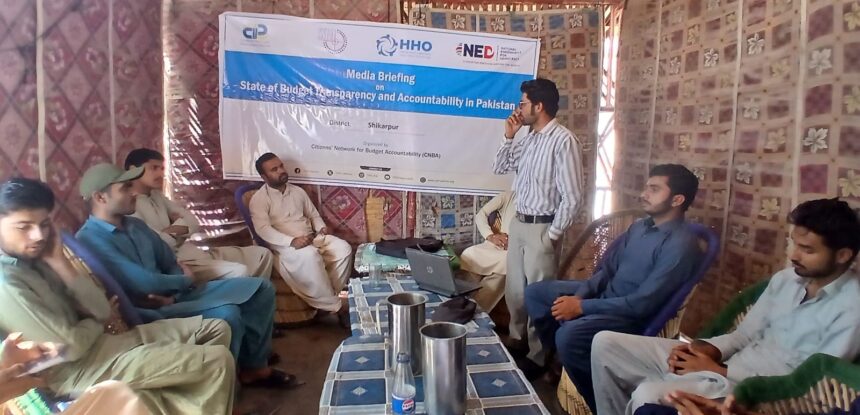
The Centre for Peace and Development Initiatives, through its Citizen Network for Budget Accountability, presented findings from the State of Budget Transparency Report 2025 at a media briefing hosted by Holding Hands Organization in Shikarpur, using fiscal year 2024–25 as the basis because full 2025–26 data are not yet available.
The report documents limited and uneven Budget Transparency across Pakistan, highlighting weak public participation and persistent accountability gaps. It notes that key budget documents are not consistently published and that citizens have minimal opportunities to influence budget priorities, undermining trust in fiscal decision making.
CNBA presenters and local stakeholders emphasised that budgets remain far from people centric. Holding Hands Organization Project Manager Mr. Naveed Ahmed observed that citizens are often informed only after decisions are finalized rather than being included in the budget process, a pattern that diminishes meaningful public input.
While budgets are generally presented on time, parliamentary scrutiny is described as weak because of limited debate days and inadequate review. The report finds that Budget Transparency often declines during implementation, as governments delay publishing expenditure details and audit reports, making effective monitoring and civil society oversight difficult.
Among provinces, Punjab shows relatively stronger performance, followed by the federal government, whereas Sindh, Khyber Pakhtunkhwa and Balochistan lag behind. Despite some regional differences, overall transparency levels remain below acceptable standards nationwide, the report warns.
Through CNBA, CPDI urged authorities to ensure timely disclosure of budget information, strengthen public participation and reinforce accountability mechanisms to improve governance and public trust. The CNBA platform, a network of civil society organisations across 101 districts, will continue publishing budget research and promoting consultations to better align fiscal planning with citizens’ needs and international standards.