



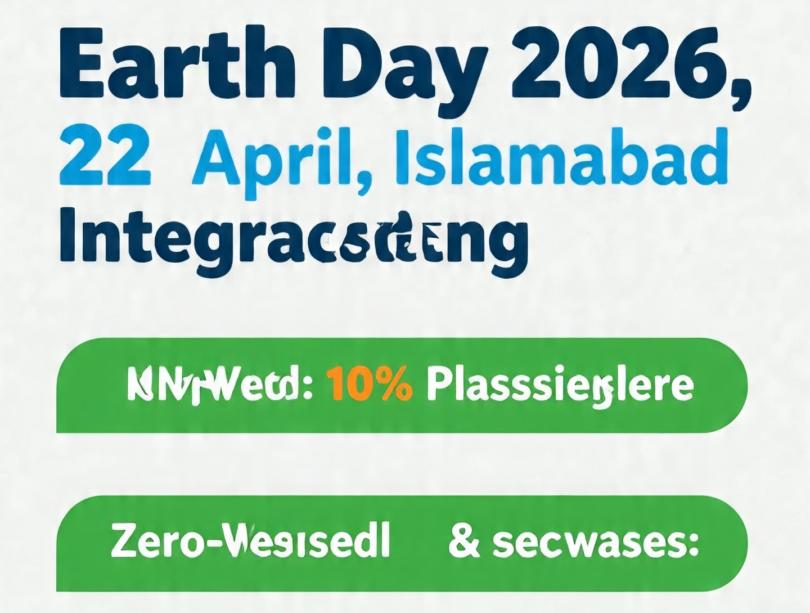
Experts at an Earth Day consultation in Islamabad urged practical zero waste measures to curb methane and plastic emissions and to strengthen Pakistan’s climate commitments under its Nationally Determined Contributions. The event, organised by the Sustainable Development Policy Institute in collaboration with the Global Alliance for Incinerator Alternatives, brought together policymakers, researchers and waste-sector practitioners to shape actionable policy interventions.
Ambily Adityan, Programme Officer for Zero Waste Cities at GAIA, highlighted that landfills rank among the largest global sources of methane and that methane’s short-term warming potential is many times higher than carbon dioxide. She said reducing methane from organic waste is one of the fastest, most cost-effective mitigation steps and that more than 45 countries have backed the COP29 declaration to tackle methane from organic waste, unlocking new finance for methane action.
Speakers warned that plastics add greenhouse gases across their lifecycle from fossil fuel extraction to disposal, and that without systemic change plastics could account for a third of residual global emissions by mid-century. Reuse systems, Ambily noted, could eliminate up to 75 percent of plastic packaging emissions, while improved composting and landfill management could reduce methane by as much as 95 percent. She also stressed that waste-to-energy incineration is carbon intensive and carries toxic health risks, and that international financial institutions are reassessing funding for such projects.
Research presented by SDPI showed Pakistan generates nearly 49.6 million tonnes of solid waste each year, of which some 60 to 65 percent is organic. The country consumes about 2.7 million tonnes of plastic annually, with roughly 86 percent mismanaged through open dumping, landfill leakage or uncontrolled disposal. Less than 10 percent of plastic is segregated at source and only 7 to 9 percent is recycled, creating an estimated annual loss of over $300 million in recoverable material and urban cleanup costs exceeding $50 million.
SDPI researcher Amna Arooj underlined the scale of food loss and waste in Pakistan, estimating around 20 million tonnes lost each year — about 26 percent of food production — representing more than $4 billion in economic losses. If processed properly, this organic waste could yield up to 2.4 billion cubic metres of biogas and roughly 12,000 GWh of energy, offering local clean energy and methane reduction benefits consistent with a zero waste approach.
Zainab Naeem of SDPI called for stronger integration of food waste policies into Pakistan’s updated NDCs and for single-use plastic bans to be paired with viable alternatives, better recycling infrastructure and improved data on plastic imports, production and hazardous electronic waste handling. She said SDPI and GAIA are exploring alternatives to incineration and promoting scale-up of SMEs and startups in recycling and circular economy ventures.
Environmental consultant Shabih ul Husnain and Suthra Punjab Project consultant Usman Khan emphasised the urgent need to raise plastic quality and ensure source segregation, noting that 30 to 40 percent of municipal waste is technically combustible but is hard to process because segregation systems remain weak. Waste management expert Kamran Hanif warned that verification gaps persist in Pakistan’s NDC and Biennial Transparency Report processes due to fragmented institutional coordination and the lack of standardised frameworks.
Speakers pointed to successful regional examples such as refill systems in India, the Philippines and Indonesia and community-based waste picker cooperatives like SWaCh in India as models Pakistan can adapt. They urged policy measures including extended producer responsibility, integrated resource recovery centres at union council level, and formal inclusion of informal waste collectors to scale sustainable waste management across Pakistan by 2040 while advancing zero waste goals.