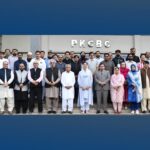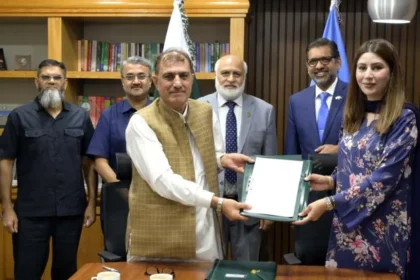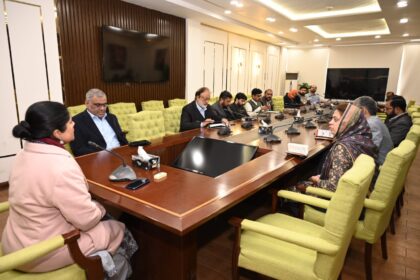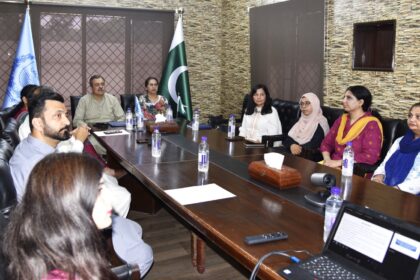
The Legal Aid Society convened a Provincial Forum on Social Inclusion in Karachi under the Aawaz II programme to push practical measures for inclusive justice after community consultations across Sindh.
District partners IRC, Sami Foundation, HWA and AWARE presented consolidated findings from Malir, Thatta, Badin, Mirpurkhas and Umerkot showing persistent gaps: inaccessible disability certification procedures, frequent humiliation and physical barriers when accessing services, no dedicated shelters for transgender persons alongside largely invisible caregiver abuse of persons with disabilities, absence of trained police focal officers, and zero representation of transgender persons or PWDs on disaster committees and welfare planning forums.
Ms. Abia Akram of STEP delivered a national analysis on barriers to access to justice for persons with disabilities while community advocates Ms. Zehrish Khan and Ms. Aradhiya Khan set out priorities for better coordination with duty bearers, more inclusive public services and dignity in everyday service delivery.
Dr. Ratana of DEPD outlined institutional priorities including the rollout of the Shanakht identity certificate and confirmed that DEPD is operational in 30 districts with roughly 100,000 PWDs registered. She stressed the need to enforce the 5 percent PWD employment quota and to reframe public debate on rights, noting that “Persons with disabilities are not beggars” and urging a rights-based approach to inclusive justice.
Mr. Abdul Hakeem from the Social Welfare Department briefed participants on Karachi’s Community Development Centre for Transgender Persons, highlighting CNIC barriers to enrolment and SWD plans for employer sensitisation, community awareness and stronger protections against violence and discrimination.
Facilitated by Ms. Maliha Zia of LAS, the forum advanced concrete asks for inclusive justice including trans-inclusive NADRA SOPs and mobile camps, strict enforcement of the 5 percent PWD and 2 percent transgender employment quotas, trained focal officers in every police station, gazetting caregiver abuse as a reportable offence, development of inclusive shelters, and reserved representation for transgender persons and PWDs on DDMA plans and welfare boards.
Participants recommitted to time-bound departmental actions to close the justice gap, with Aawaz II provincial engagement channels to follow up and submissions planned for the Multi-Sectoral Coordination Committee and its Technical Working Groups to turn recommendations into practice.