Government deliberations ahead of the Federal Budget 2026-27 and ongoing talks with the IMF could translate into higher costs for households and businesses that plan to adopt electric vehicles or install solar systems, according to sources involved in budget consultations. The potential shift in fiscal policy is expected to touch both mobility and renewable energy sectors as authorities weigh broader tax base measures.
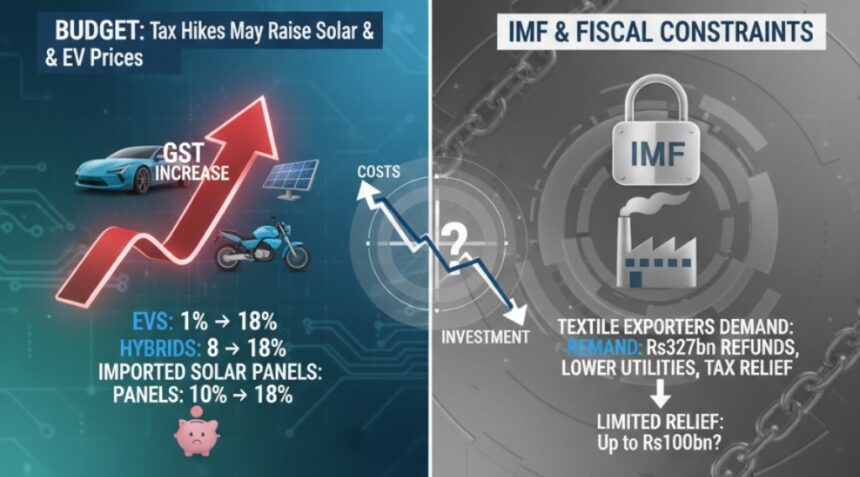
Officials have discussed raising GST on electric vehicles from the current 1 percent to 18 percent while increasing the GST on hybrid vehicles from 8 percent to 18 percent, proposals that would raise prices across electric cars, motorcycles, rickshaws, buses and trucks. Proposals under review also include higher duties on electric pickup trucks, electric tractors and double-cabin models, a move that industry observers say would slow adoption and investment in the country’s nascent EV market. Stakeholders warn that steeper EV taxes may reverse momentum in electrifying transport at a critical stage.
The solar sector is also likely to feel the impact if recommendations to raise GST on imported solar panels from 10 percent to 18 percent are adopted. Analysts and installers say such a change would increase upfront costs for home and commercial solar projects just as demand for alternative energy grows amid rising electricity prices and frequent outages. Renewable energy advocates caution that higher taxes on clean technologies could undermine efforts to reduce reliance on expensive fossil fuels and to expand distributed generation across Pakistan.
At the same time, Pakistan’s export-oriented textile industry has pressed the government to release pending tax refunds worth about Rs327 billion, saying the delays are creating acute liquidity pressures for exporters. Industrialists have also called for reductions in electricity and gas tariffs and targeted tax relief to help manufacturers remain competitive. Authorities indicate they are exploring measures to assist exporters with potential relief estimated at up to Rs100 billion, but sources say large-scale incentives may be limited by fiscal constraints and commitments under the IMF programme.
As budget decisions take shape, the trade-off between meeting fiscal targets and supporting the green transition will be closely watched by businesses and consumers. Higher levies on imported panels and vehicles could raise the cost of going green for many Pakistanis, while restrained support for exporters would leave industries navigating tighter margins in an already challenging global market.