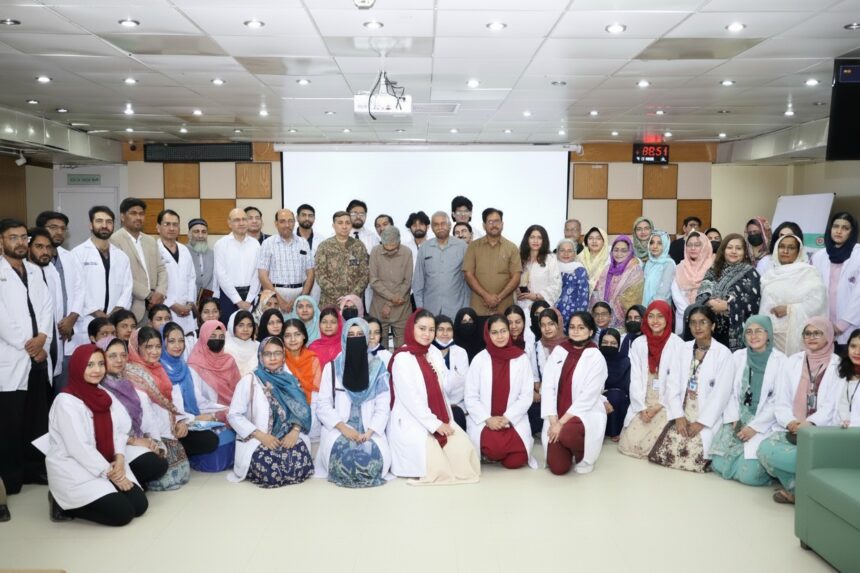
The Pakistan National Heart Association (PANAH), in partnership with the Armed Forces Institute of Cardiology and Military Hospital (AFIC-MH) Rawalpindi, held an awareness symposium on World No Tobacco Day 2026 attended by youth students, health professionals, civil society representatives and public health advocates to press for stronger tobacco control in Pakistan.
This year’s theme, Unmasking the Appeal – Countering Nicotine and Tobacco Addiction, highlighted how tobacco and nicotine industries are drawing young people through new products and marketing tactics, creating risks of lifelong addiction and serious disease.
Prof. Dr. Muhammad Nadir Khan warned that tobacco consumption is a leading contributor to cardiovascular disease in Pakistan and urged young people to reject tobacco and nicotine products and adopt healthier lifestyles to reduce heart disease and premature death.
Maj. Gen. (R) Masud-ur-Rehman Kiani, President of PANAH, noted that tobacco use remains one of the most preventable causes of death and called on policymakers to strengthen tobacco control measures to protect future generations from nicotine addiction and its long-term harms.
Sana Ullah Ghumman, General Secretary of PANAH, drew attention to the heavy economic burden of tobacco-related illness, including healthcare costs and productivity losses, and cautioned that emerging nicotine products such as e-cigarettes and nicotine pouches are being marketed as modern alternatives despite clear addiction risks noted by WHO.
Col. Dr. Abdul Rehman Jokhio and Dr. Shazia Fatima emphasized that nicotine affects nearly every organ and raises the risk of cancers, heart attacks, lung disease, diabetes and adverse pregnancy outcomes, underscoring the need for prevention, public awareness and accessible cessation support services.
Dr. Abdul Qayyum Awan, Senior Vice President of PANAH, urged implementation of comprehensive tobacco control policies including increased taxation on all tobacco and nicotine products, full bans on advertising and promotion, enforcement of smoke-free public spaces and expanded awareness campaigns in schools and universities to curb rising nicotine use among youth.
Speakers stressed coordinated action by health institutions, civil society and government to strengthen tobacco control and ensure that policy measures and cessation services reach communities across Pakistan.