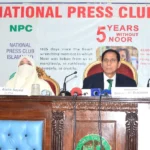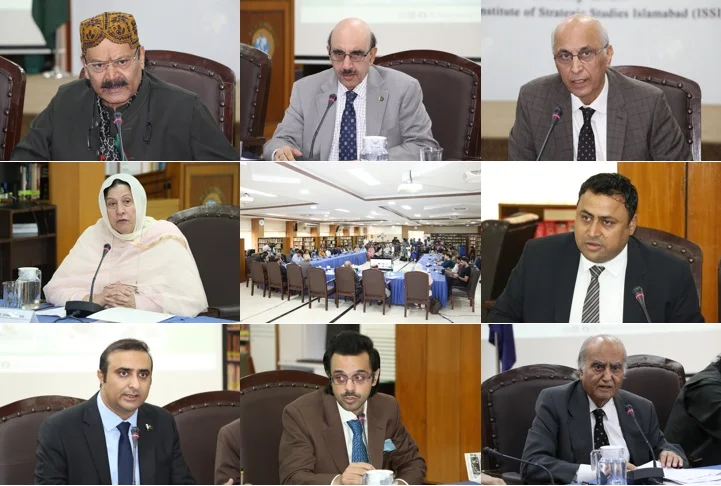
ISLAMABAD: The India Study Centre (ISC) at the Institute of Strategic Studies, Islamabad (ISSI), in collaboration with the Youth Forum for Kashmir (YFK), organised an event titled “Youm-e-Ilhaq-e-Pakistan: Revisiting History, Shaping the Future” to commemorate Youm-e-Ilhaq-e-Pakistan.
Mr Rana Muhammad Qasim Noon, Chairman Parliamentary Committee on Kashmir, attended the event as chief guest, while Ambassador Masood Khan, former President of Azad Jammu and Kashmir, was the guest of honour. Other speakers included Ambassador Moin ul Haque, newly appointed Director General ISSI; Mrs Shamim Shawl, Kashmiri leader and human rights activist; Mr Saud Sultan, young Kashmiri scholar; and Dr Khurram Abbas, Director ISC.
In his welcome remarks, Ambassador Moin ul Haque said Youm-e-Ilhaq-e-Pakistan symbolised the enduring bond between the people of Jammu and Kashmir and Pakistan. He recalled that almost 80 years ago, on July 19, 1947, the All Jammu and Kashmir Muslim Conference passed a historic resolution expressing the desire of the Muslim majority of the state of Jammu and Kashmir to accede to Pakistan.
He said the events that followed the partition of the subcontinent turned what should have been a peaceful political transition into one of the world’s longest unresolved disputes. He added that Pakistan had consistently advocated dialogue, diplomacy and a peaceful resolution of the dispute, maintaining that lasting peace in South Asia was closely linked with its just settlement.
Speaking as chief guest, Mr Rana Muhammad Qasim Noon said July 19 held special significance in the history of the freedom movement of Jammu and Kashmir. He said the All Jammu and Kashmir Muslim Conference, representing the aspirations of the Kashmiri people, passed a landmark resolution in Srinagar almost eight decades ago, declaring the will of the people of the region to accede to the soon-to-be-formed state of Pakistan.
Mr Noon said the resolution was not merely a political gesture but a clear expression of cultural, religious and ideological alignment between the people of Jammu and Kashmir and Pakistan. He said Pakistanis across the country and around the world stood in solidarity with the people of Jammu and Kashmir on Youm-e-Ilhaq-e-Pakistan.
He said Pakistan would not leave its Kashmiri brethren alone in their struggle for freedom from illegal Indian clutches. He also called upon the international community to recognise the legitimate aspirations of the Kashmiri people and act against continuing injustices, demographic changes and curtailment of freedoms in the occupied territory.
Ambassador Masood Khan said Kashmir’s accession to Pakistan was closely linked to the ideological foundations of Pakistan. Referring to the period before the partition of the subcontinent, he said debates were taking place over the future of Muslim-majority regions after the end of British rule, and the people of Jammu and Kashmir aligned themselves with the vision of joining Pakistan.
Highlighting the international dimension of the dispute, Ambassador Khan referred to the United Nations Security Council resolutions, saying they recognised the right of the people of Jammu and Kashmir to determine their future through a plebiscite.
Earlier, in his opening remarks, Dr Khurram Abbas said Kashmiris across the world observed July 19 every year as the day of accession to Pakistan. He said the day marked the actual starting point of expressing their will to join Pakistan. He added that due to geographical, economic, cultural and religious linkages between Jammu and Kashmir and Pakistan, the demand for accession to Pakistan was a natural choice.
Mrs Shamim Shawl paid tribute to the foresight of the young Kashmiri leadership in 1947 for recognising that their future and prosperity lay in acceding to Pakistan. She also highlighted the plight of Kashmiri people living under Indian occupation.
She said that following the martyrdom of Burhan Wani, thousands of young Kashmiris were arrested and put behind bars. She said the use of pellet guns had snatched the dreams of many young Kashmiris, citing Insha Malik as a prime example. She added that Kashmiri leaders, including Shabir Shah, Asiya Andrabi and Dr Ashiq Hussain Faktoo, had been languishing in Indian jails for many years, while the Indian government was making efforts to announce the death penalty for Yasin Malik.
Mr Saud Sultan said Indian claims regarding the Maharaja signing the Instrument of Accession on October 26, 1947, had been rebutted by historians Alastair Lamb and Victoria Schofield. He said this made the Indian occupation of Jammu and Kashmir illegal. He also said the Maharaja had already lost control over large parts of the state and was therefore in no position to sign the alleged instrument of accession.
Mr Sultan underlined the importance of responsible research, advocacy and digital engagement, urging the young generation to counter misinformation with credible evidence and contribute constructively to informed international discourse. He said Pakistan and Kashmir shared a strong historical bond, adding that a stronger Pakistan meant a stronger case for Kashmir across the world.
In his concluding remarks, Ambassador Khalid Mahmood said the Muslim Conference had decided that Kashmir would become part of Pakistan before the creation of Pakistan. He said the decision was not taken casually but was based on religious, geographical, cultural and economic linkages between Pakistan and Kashmir. He added that the final fate of the territory would ultimately be decided in accordance with the wishes of the people of Kashmir.