



ISLAMABAD: The National Assembly Standing Committee on Religious Affairs and Inter-Faith Harmony on Wednesday emphasised that the Hajj Policy 2027-2030 should be pilgrim-centric, transparent, financially prudent and responsive to the evolving needs of Pakistani pilgrims, while ensuring parliamentary oversight and accountability.
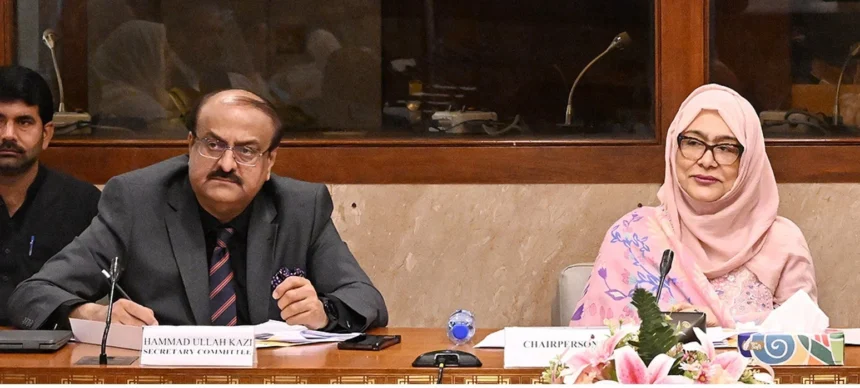
The committee, which met at Parliament House under the chairpersonship of MNA Shagufta Jumani, reviewed the performance of Hajj Operation 2026 and deliberated on the preparations and proposed policy framework for Hajj 2027-2030.
For an in-depth review of the proposed policy and to formulate long-term recommendations, the committee constituted a sub-committee under the convenorship of MNA Muhammad Ijaz-ul-Haq. MNAs Shagufta Jumani, Ahmed Saleem Siddique and Naeema Kishwar were nominated as members of the sub-committee.
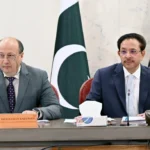
The Minister for Religious Affairs and Inter-Faith Harmony and the federal secretary briefed the committee on the salient features of the proposed Hajj Policy and Plan 2027-2030. The briefing highlighted continuity, predictability and long-term operational planning in line with Saudi Hajj requirements.
The minister informed the committee that the policy aimed to improve services for Pakistani pilgrims, enhance transparency and accountability, reduce procurement and operational costs, accelerate digital transformation and strengthen pilgrim welfare mechanisms.
The committee was told that the key measures proposed under the policy included continuous registration, a priority waiting-list mechanism, advance selection of preferred Hajj arrangements, a 10 per cent registration deposit, a Shariah-compliant Hajj savings scheme, and multi-year procurement and service contracts.
The policy also provides for a 60 per cent government and 40 per cent private Hajj quota, long- and short-duration Hajj packages, enhanced regulation of private Hajj operators, merit-based selection of welfare staff, and strengthened Takaful protection and emergency response mechanisms.
The committee expressed serious displeasure over the presentation of the Hajj Policy 2027 before the Federal Cabinet for approval without its prior consideration and without obtaining the views and recommendations of elected representatives through the standing committee.
The chairperson and members observed that such a practice undermined the constitutional role of Parliament and weakened the committee’s oversight function, particularly in matters of significant public importance directly linked to the welfare of Pakistani pilgrims.
The minister assured the committee that, in future, all policies would be placed before the standing committee for detailed consideration, consultation and input before submission to the Federal Cabinet, to ensure meaningful parliamentary oversight and participation in policy formulation.
The committee also received a detailed briefing on the governance, financial management and functioning of the Evacuee Trust Property Board (ETPB), including the management and preservation of gurdwaras, mandirs and other religious and heritage properties. It was also briefed on the board’s sources of income, annual budget, audit mechanism and ongoing development and conservation projects.
Members took serious note of substantial funds being generated and allocated for the management and development of evacuee trust properties and sought detailed clarification regarding their utilisation, financial controls, transparency and monitoring mechanisms. They questioned whether the expenditure incurred on development and conservation projects matched the actual progress and quality of work on the ground.
While reviewing the Minority Development Fund, the committee questioned the pace of implementation and utilisation of approved funds, particularly in cases where significant allocations remained unutilised. It sought project-wise details of allocations, releases, expenditure, physical progress, completion timelines and mechanisms for third-party monitoring and quality assurance.
The committee also raised serious concerns over the Rs883.834 million residential block at Gurdwara Janam Asthan, Nankana Sahib, which has reportedly achieved only 60 per cent physical progress. It sought a clear explanation regarding the pace of execution, cost escalation, contractual arrangements and expected date of completion.
The committee directed the Ministry of Religious Affairs and Inter-Faith Harmony and the ETPB to provide a comprehensive project-wise statement of funds allocated, released and utilised, along with the current physical status of all ongoing schemes, reasons for delays, procurement details and accountability mechanisms.
It stressed that public funds must be utilised transparently, efficiently and strictly for the intended welfare, preservation and development objectives of minority communities and religious heritage sites.
The committee recommended that, on the pattern of the Hajj Policy, a comprehensive Ziarat Policy for the holy places and religious sites of non-Muslim citizens of Pakistan should also be formulated. It said the policy should include appropriate arrangements for pilgrimage, facilitation, security, welfare and preservation of religious heritage, and be presented before the committee in its next meeting for detailed consideration.
The committee also recommended that the Minister for Religious Affairs and Inter-Faith Harmony take up the issue of inadequacy of the Minority Development Fund with the Prime Minister and seek a substantial increase in its allocation to ensure effective implementation of development, welfare and empowerment initiatives for minority communities.
The committee deferred the review of the implementation status of its previous recommendations and confirmed the minutes of its previous meeting held on July 15, 2026.
The meeting was attended by MNAs Muhammad Ijaz-ul-Haq, Seema Mohi-ud-Din Jamelli, Asiya Naz Tanoli, Shahnaz Saleem Malik via Zoom, Muneeba Iqbal, Neelam, Dr Nelson Azeem, Musarrat Rafique Mahesar, Samina Khalid Ghurki via Zoom, Ahmed Saleem Siddiqui and Naeema Kishwar Khan. The minister, secretary and senior officers of the Ministry of Religious Affairs and Inter-Faith Harmony were also present.