



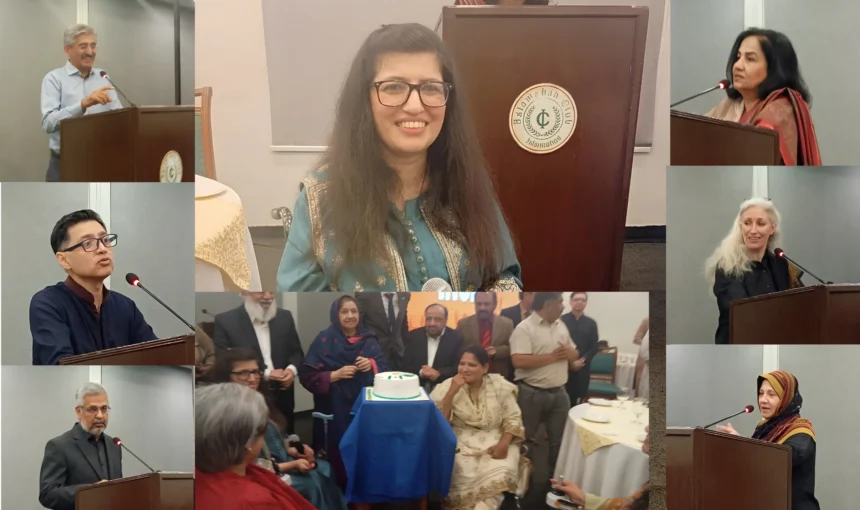
ISLAMABAD: Parliamentarians, United Nations representatives, civil society leaders and disability rights activists on Wednesday celebrated the conferment of the Tamgha-e-Imtiaz on Ms Abia Akram, paying tribute to her nearly three decades of work for the rights, inclusion and empowerment of persons with disabilities, particularly women and girls.
The ceremony, held at Islamabad Club on September 16, 2026, was hosted by MNA Ms Huma A. Chughtai and the Special Talent Exchange Program (STEP). The Government of Pakistan conferred the award on Ms Akram in recognition of her contributions to disability rights, empowerment and inclusion.
Welcoming the participants, Ms Chughtai said Ms Akram had been at the forefront of the disability rights movement in Pakistan. She described her as a trailblazer who helped initiate and strengthen activism for persons with disabilities and special needs. She also acknowledged the cooperation between STEP and different national and international organisations.
Among those recognised at the gathering were Speranza Tillman, Manuel Wickman, Jamshed Kazi, Professor Rizwan Ashraf and other distinguished guests. Ms Chughtai also specially mentioned Ms Akram’s parents, who attended the ceremony despite being unwell to share the happiness of their daughter’s national honour.
The ceremony featured documentaries on the disability rights movement and the work carried out by STEP. The presentations highlighted the challenges faced by persons with disabilities in communication, transport, accessibility, education, healthcare, employment and participation in society. Speakers also underlined the need for stronger implementation of laws and policies and improved coordination between government and non-government organisations.
STEP Executive Director Atif Sheikh said the disability rights movement had taken more than two decades to reach its present stage and involved the collective efforts of parliamentarians, civil society organisations, international organisations, national human rights institutions and other partners. He said Ms Akram had played an important role in the movement and congratulated her on receiving the Tamgha-e-Imtiaz.
Mr Sheikh said STEP had worked with United Nations organisations and other partners on disability-inclusive development. He stressed the importance of training and awareness so that disability is understood from a human rights perspective rather than only through charity or a medical approach. He said the award was not only a recognition for Ms Akram but also an honour for STEP, the disability rights movement and the many organisations that had supported the work.
He named Sightsavers, UN agencies, NUST, academic institutions, the German Embassy and the US Embassy among organisations connected with the broader work. He also mentioned cooperation with the National Disaster Management Authority, IFES, the corporate sector and UNFPA.
Salia of UNFPA praised Ms Akram as a source of motivation and said working with her had been a learning experience. She said the experience had provided a different understanding of the barriers faced by persons with disabilities and congratulated Ms Akram for her long work.
Jamshed Kazi, introduced at the event as the UN Women Country Representative, said that when he first came to Pakistan in 2015, disability was largely discussed in terms of charity and welfare, rather than rights, dignity and inclusion. He said much of the change in that approach over the past decade should be credited to Ms Akram for becoming a champion and advocate for disability rights.
Mr Kazi also referred to Ms Akram’s international work, saying he frequently heard from people who had met her at international forums, including ESCAP and New York. He said the UN Women team was proud of her work in Pakistan and internationally and extended best wishes to her and her parents.
Pernille Ironside, introduced as the UNICEF Country Representative and interim UN Resident Coordinator, said Ms Akram was among Pakistani women who had stood out to her from their first interaction. She described the recognition as fitting for her role as a woman leader and an advocate for women and persons with disabilities. She said Ms Akram’s influence extended beyond national borders.
Ms Ironside recalled working with Ms Akram on issues including accessibility during natural disasters, early identification of assistive devices for children and women’s activism. On behalf of the UN family, she offered congratulations and respect and said the UN would continue supporting advocacy for stronger systems and legal implementation.
Professor Rizwan Ashraf of NUST School of Health Sciences said he had known Ms Akram for around one and a half years and had worked with her on inclusion in higher education. He said many higher education institutions still needed better awareness and facilities for persons with disabilities. He said NUST and STEP had started workshops for medical students and were working to create a more inclusive culture.
He congratulated Ms Akram on behalf of NUST School of Health Sciences and NUST, and said the university would continue supporting efforts to improve awareness and inclusion in higher education institutions.
Zulekha of the National Disaster Management Authority, who heads the Gender and Child Center, also congratulated Ms Akram and her parents. She said her work with Ms Akram over the previous three and a half years had helped her better understand the specific challenges faced by persons with disabilities during disasters.
She said Ms Akram had helped introduce the concept of different and overlapping challenges faced by women and men with disabilities and by people with different disabilities. She said this understanding had contributed to work on revising and updating NDMA policy guidelines, introducing an intersectionality approach and developing inclusive early warning systems. She described Ms Akram as a prominent face of women with disabilities in Pakistan.
Ms Munazza, whose remarks were delivered during the ceremony, congratulated Ms Akram, Atif Sheikh, the STEP team, the National Forum of Women with Disabilities and Ms Akram’s parents. She said Ms Akram had become a strong voice for women with disabilities and for people who could not speak for themselves. She credited her with helping bring the voices of marginalised women into national, regional and global forums.
Ms Munazza also recalled travelling with Ms Akram and witnessing her efforts to obtain accessible wheelchairs at airports, hotels and other places. She said Ms Akram consistently fought for her own rights as well as for other persons with disabilities travelling with her. She also highlighted Ms Akram’s role as a member of the global board of trustees of Sightsavers and as a global ambassador for the Equal World campaign.
A further speaker from the STEP team described Ms Akram as a colleague, boss, sister and mentor, and said the Tamgha-e-Imtiaz was being felt as an honour for the wider team as well. The speaker thanked Sightsavers, Munazza, Saliha, Zulekha and UNFPA for their support and stressed that women with disabilities should be included from the early stages of development projects and programmes.
A British Council representative said he had learned a great deal from Ms Akram during several years of interaction through the Aawaz programme. He said Ms Akram and disability rights leader Zahida Qureshi had influenced changes in programme strategy, including greater attention to women and girls with disabilities and work with families and communities.
He also recalled how Ms Akram had supported Zahida Qureshi in attending a global disability summit, saying Ms Akram was the first person to contact him with the suggestion that Ms Qureshi should receive support to attend the international event. He said he considered himself a volunteer for the National Forum for Women with Disabilities and viewed the award as recognition not only for Ms Akram but for the wider group of women leaders in the disability rights movement.
During the ceremony, Ms Chughtai presented an overview of Ms Akram’s professional journey. According to the presentation, Ms Akram began her disability rights work at the grassroots level in 1997, working directly with persons with disabilities, families and communities, and addressing barriers in education, employment, healthcare, accessibility, social participation and decision-making. She is a founder and director of projects at STEP Pakistan.
The presentation said Ms Akram is co-founder and CEO of the National Forum for Women with Disabilities and has worked to bring the voices of women with disabilities from grassroots communities to national, regional and global forums. It said she has advocated for women with disabilities to be recognised not only as beneficiaries but also as leaders, decision-makers and advocates.
It further stated that Ms Akram is founder and co-chairperson of the Asia Pacific Disability Task Force, founder and chair of the Asia Pacific Women with Disabilities Network and founder and chair of the Global Forum on the Leadership of Women with Disabilities. She also serves as a focal person for the disability constituency of AP RCM and as a trustee on the UK board of Sightsavers International.
Her recognitions listed during the event included the Presidential Human Rights Award of the Government of Pakistan, BBC 100 Women, the Chevening 50 Change Makers Award and the WIN DRR Award. Her message of inclusion was described through the principle, “nothing about us without us”, calling for women with disabilities to be included in decisions affecting their lives.
Speaking on the occasion, Ms Akram said the Tamgha-e-Imtiaz was both a prestigious honour and a major responsibility. She said work for the rights of women and girls with disabilities had required support, commitment and solidarity from many people over three decades. She described the award as recognition not only for herself but for the wider disability movement, her colleagues and women with disabilities across Pakistan.
Ms Akram thanked her parents and brother for their support, saying they had taught her to think beyond personal goals and consider how to help other people. She also thanked the STEP team and all participants and supporters who had remained involved in the movement.
She said the celebration was not an ending but a first step towards further work. Ms Akram stressed that persons with disabilities in humanitarian situations and rural areas still faced serious challenges and called for continued cooperation among governments, UN agencies, international organisations and disability rights stakeholders.
She also thanked the Minister for Human Rights for supporting her nomination and for recognising persons with disabilities as key stakeholders. She stressed the need for proper budget allocations, stronger implementation of legislation and removal of legal and systematic barriers faced by persons with disabilities.
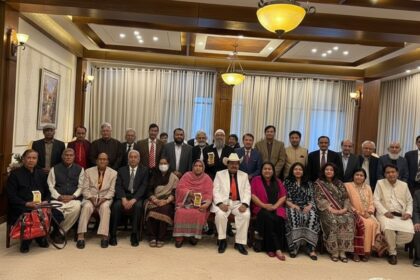
The ceremony concluded with guests gathering around Ms Akram and her family for a cake-cutting to mark the occasion. The event brought together representatives from Parliament, the UN, government institutions, universities, civil society and international organisations to celebrate the national recognition given to one of Pakistan’s long-serving disability rights advocates.