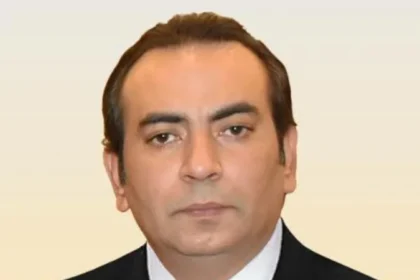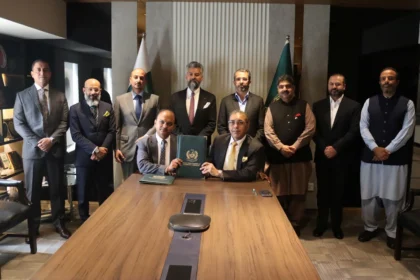




ISLAMABAD: Federal Minister for Finance and Revenue Senator Muhammad Aurangzeb has called for wide-ranging reforms in Pakistan’s power sector to improve efficiency, attract private investment and strengthen the electricity system financially while protecting consumers.
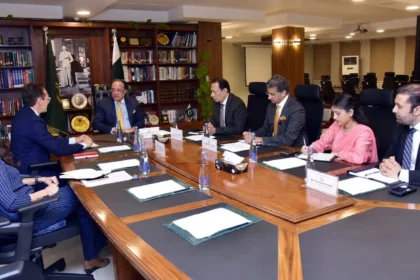
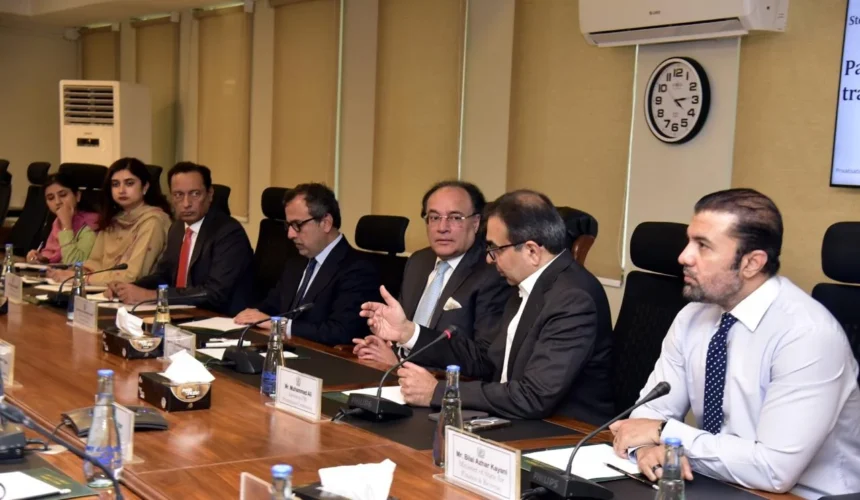
He was chairing the second meeting of the Steering Committee on Power Sector Regulatory Regime at the Finance Division. The committee reviewed progress on power sector reforms and discussed major changes taking place in the industry, including the rapid growth of solar power and changing patterns of electricity demand.
Senator Aurangzeb said the changing power sector required a regulatory system that could keep pace with new technology while supporting investment, competition, better services and consumer interests.
The committee reviewed several major challenges facing the power sector, including existing capacity obligations, changes in electricity demand on the national grid, service quality and limits on new investment. Members also discussed the need for stronger incentives for efficiency and a better system for providing government subsidies.
The finance minister stressed the need for a market structure that gives power companies clearer incentives to improve efficiency and service quality. The committee also discussed increasing competition and private sector participation as part of the reform process.
One proposal discussed during the meeting was greater separation between the electricity network and supply businesses. Under the proposed approach, distribution network operators would mainly focus on running and maintaining the electricity network, while competitive supply companies would operate under an appropriate regulatory system.
The committee also discussed the need for a predictable and transparent regulatory framework. This would include clearer rules for sharing risks, improved licensing arrangements and tariff methods that can support investment while protecting consumers from unnecessary costs.
Senator Aurangzeb said reforms should improve the financial position of the power sector, reduce waste and inefficiencies and create better conditions for long-term private investment.
The meeting also examined new opportunities created by changes in the electricity market, especially the growing use of battery energy storage systems and other technologies. The committee discussed whether distribution companies could take up suitable additional infrastructure and related commercial activities through separate entities or special purpose vehicles.
The purpose of such activities would be to make better use of existing public assets, create additional income and ultimately provide benefits to consumers. However, the finance minister stressed that such commercial activities must operate under clear rules, with proper safeguards and transparency.
He said any financial benefits generated through public infrastructure should be shared appropriately with consumers and should not simply become an additional source of revenue without proper oversight.
The committee also discussed ways to make government support and subsidies more targeted and effective. Members stressed that reforms should remain focused on financial sustainability, better electricity services and affordable power for consumers.
The finance minister said the future regulatory system must be flexible enough to deal with new developments such as distributed electricity generation, battery storage and electric vehicles. At the same time, he said, the system must maintain reliable electricity supplies, encourage efficient investment and create more opportunities for private companies.
The committee was also briefed on the proposed programme of the Technical Working Group, including its terms of reference and work on the tariff methodology.
Senator Aurangzeb directed the Technical Working Group to follow a structured and consultative process and take the views of relevant stakeholders into account. He said the group should prepare practical recommendations that could later be considered by the Steering Committee.
He stressed that the power sector reform process should be based on evidence and should be reviewed and improved as conditions change. He also called for active participation from stakeholders while ensuring that the work moves according to clear timelines and results in practical recommendations.
The meeting was attended by Federal Minister for Power Sardar Awais Ahmad Khan Leghari, Minister of State for Finance, Adviser to the Prime Minister on Privatisation Muhammad Ali, senior officials of the Finance Division and representatives of relevant public sector institutions and other stakeholders.