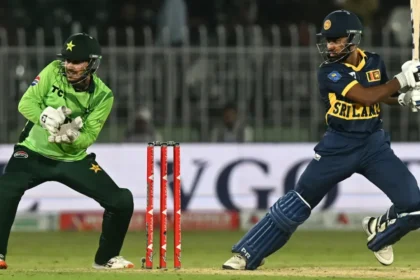




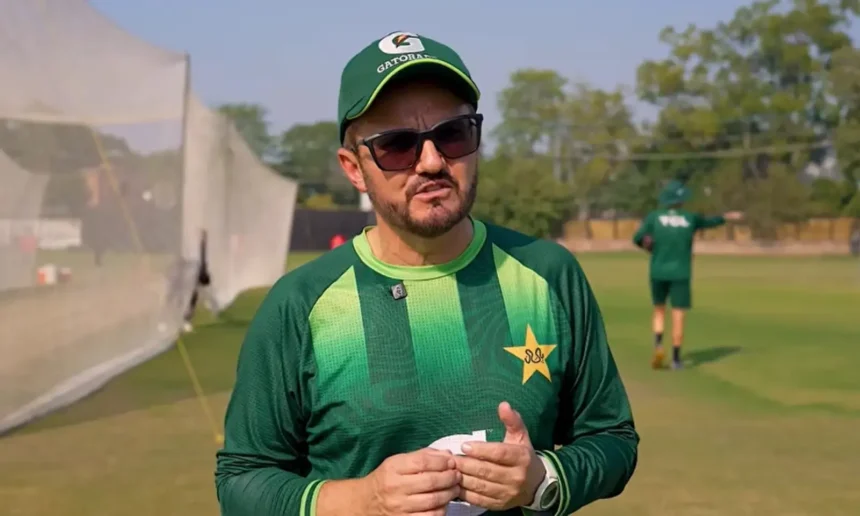
ISLAMABAD: Pakistan head coach Mike Hesson is banking on his experienced top order to deliver when it matters most as the hosts prepare to face Sri Lanka in Saturday’s One-day International (ODI) tri-series final at Gaddafi Stadium in Lahore.
Pakistan reached the final with three consecutive victories before suffering an eight-wicket defeat against Sri Lanka in their last league match, when they were bowled out for only 110. The hosts will need a marked improvement from their leading batters to avoid a repeat against the Islanders, who chased down the target with more than 30 overs to spare.
Speaking to PCB Digital in a video released on Thursday, Hesson said Pakistan had managed to win despite some key players not making major contributions and hoped the final would bring out their best.
“It’s been a pretty good couple of weeks. We have played some decent cricket without being perfect. To get three wins in a row without contributions from a few of our key players is a good sign,” he said. “I still don’t think we have played our best game yet. Hopefully, we are saving that for the final.”
The numbers highlight the concern surrounding Pakistan’s top order. Fakhar Zaman has scored only 31 runs in four innings, while former captain Babar Azam has made 118 in the same number of outings. Saim Ayub, who opened with Fakhar in the first three matches before being released from the squad at his own request, scored 21 runs in three innings.
Fakhar made 16 against Sri Lanka in the opening match, was dismissed for a first-ball duck against England, scored 10 in the second fixture against England and managed only five against Sri Lanka on Tuesday. Babar began the series with 45 against Sri Lanka, followed it with 34 against England, then scored 10 before making 29 in the latest defeat.
Saim scored seven, eight and six in his three appearances. He was later released to return to domestic cricket and work on his batting form, with Sahibzada Farhan named as his replacement. Opener Maaz Sadaqat was also called up earlier.
Hesson, however, remains confident that Pakistan’s senior batters Fakhar and Babar can rise to the occasion, describing the final as the right stage for them to produce a match-winning performance.
“You are talking about two of the greatest players in Pakistan’s history in the top three. I expect big players to stand up in big games,” he said. “The fact that we have been able to achieve the wins that we have without the top order performing as well as we know they are capable of is a good sign. A couple of our key players are searching for that match-winning performance and there’s no better place to do it than in a final.”
While the top order has struggled, Pakistan’s middle order has made important contributions during the series. Salman Ali Agha struck a commanding 107 off 90 balls in the opening victory over Sri Lanka, while Hasan Nawaz scored 79 against England. Arafat Minhas also made 59 in that match.
Shadab Khan’s unbeaten 113 against England in Lahore proved decisive, as he and Haris Rauf put together an unbroken 89-run stand for the last wicket to secure a remarkable one-wicket win.
Hesson praised Salman’s achievements and also lauded Hasan’s development, especially his growing ability to handle pressure in the middle order.
“Salman Ali Agha has got the most hundreds of any Pakistan player batting at number five or below in an ODI,” he said. “His performance is often underrated.”
He added that Hasan was learning to “control the chase, understand risk and manage it”, calling his progress encouraging.
Pakistan’s bowling, led by captain Shaheen Shah Afridi, has also provided positives. Hesson praised the left-arm pacer’s ability to take early wickets and acknowledged contributions from Naseem Shah, Haris Rauf and young Arafat Minhas.
Pakistan have won 12 of their 19 ODIs since Hesson took charge as white-ball head coach last year. They will now hope their collective strength is backed by a decisive contribution from the top order when the trophy is at stake.