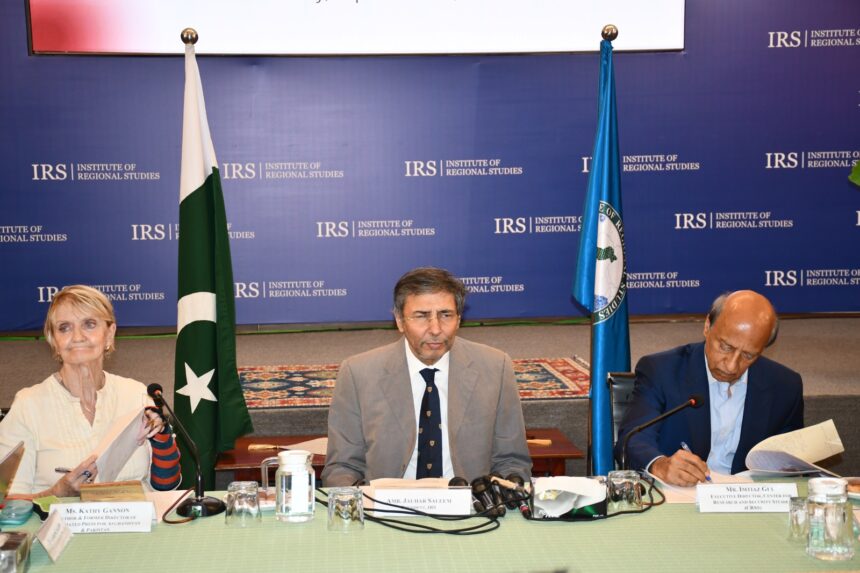
Efforts to isolate Afghanistan risk further alienating its people and inadvertently creating space for terrorist groups to thrive, warned Kathy Gannon, a distinguished author and former Director for Afghanistan and Pakistan at the Associated Press. Gannon’s remarks came during a roundtable discussion hosted by the Institute of Regional Studies, where experts highlighted the need for active engagement with Afghanistan, including constructive dialogue with the Taliban government.
Gannon argued that Western governments are misjudging the reality on the ground by imposing ultimatums rather than maintaining open channels of communication with Afghans themselves. She stressed the need for a comprehensive revision of current policies and strategies toward Afghanistan. Despite acknowledging serious restrictions on women’s education and freedom of movement, Gannon noted during her recent visit to Afghanistan that she saw women working in public places without male accompaniment, and observed some improvements in public security and a reduction in corruption. She called attention to the fact that, while imperfect, Afghanistan is in fact functioning.
Imtiaz Gul, Executive Director of the Centre for Research and Security Studies, advocated for a multilateral and regional approach to combat terrorism originating from Afghanistan, noting that this threat affects all neighboring countries. He welcomed the Taliban administration’s willingness to engage with the international community but urged the group to address the concerns of other nations.
Former Pakistani ambassador Ashraf Jehangir Qazi cautioned against adopting a short-term, security-focused view of Afghanistan. Instead, he recommended a pragmatic, long-term strategy based on broad-based and generous engagement, suggesting that Afghans are best positioned to resolve their own challenges.
Ambassador Jauhar Saleem, President of the Institute of Regional Studies, highlighted the contrasting Western and regional perspectives on Afghanistan. He pointed out that while the West tends to emphasize governance failures and human rights concerns, regional voices at the event called for balanced engagement and cooperation. Saleem emphasized that Pakistan supports Afghan-led solutions without foreign intervention and regards Afghanistan as a key partner for trade and regional connectivity. He also noted Pakistan’s expectation that Afghan soil will not be used for cross-border terrorism, stressing the importance of mutual respect and trust to build a lasting economic partnership beneficial to the entire region.