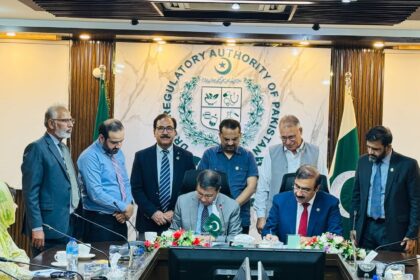





CAIDS 2025 brought national and international experts together at Riphah International University Islamabad to discuss emerging trends in computing, artificial intelligence and data science. The hybrid format allowed wide participation from researchers, academicians, industry professionals and policymakers, reinforcing the conference’s role as a platform for research-driven solutions relevant to Pakistan.
The event was inaugurated by Prof. Dr. Anis Ahmad, Vice Chancellor of Riphah International University, alongside Dr. Najeebullah Marwat, Member for Science, Technology & ICT at the Planning Commission. Dr. Muhammad Israr, Secretary of the Higher Education Department Khyber Pakhtunkhwa, also attended, underlining government interest in expanding higher education access and research capacity in remote districts.
Organisers included University of Science & Technology Bannu, Riphah International University Islamabad, University of Lakki Marwat, Gomal University, KIWI Bannu and Multimedia University Malaysia, reflecting a collaborative approach to strengthen academia industry linkages. CAIDS 2025 received financial and technical backing from partner institutions and support from the Pakistan Science Foundation for a competitive research grant focused on explainable AI for multilingual disinformation analysis (Project No. PSF-CRP/TUBITAK-IV/AI/KPK-GU (33)). Support from the Higher Education Commission is currently in process.
Speakers underlined ethical and socially responsible deployment of technology, with Prof. Dr. Anis Ahmad stressing the importance of ethical and Islamic values in guiding youth working in information technology and telecommunications. Prof. Dr. Muhammad Zubair, Dean of the Faculty of Computing at Riphah, highlighted Pakistan’s progress in software engineering and digital innovation and called for stronger connections between universities and industry to groom young researchers.
Keynote addresses from leaders across Pakistani universities, including vice chancellors from UST Bannu, University of Lakki Marwat, Khushal Khan Khattak University Karak, Hazara University, UET Peshawar and Brains Institute Peshawar, explored technology-driven educational strategies, sustainable development goals and the societal impact of artificial intelligence. Selected papers will be considered for publication in MMU Press journals after an additional peer review.
At the close of the conference, Dr. Muhammad Israr convened a high-level meeting with participating vice chancellors and Prof. Dr. Anis Ahmad to discuss educational infrastructure and facility availability in southern districts of Khyber Pakhtunkhwa. Riphah International University pledged its support for expanding higher education, with a special emphasis on initiatives to improve women’s access to quality and sustainable education in underserved areas.