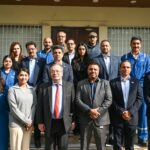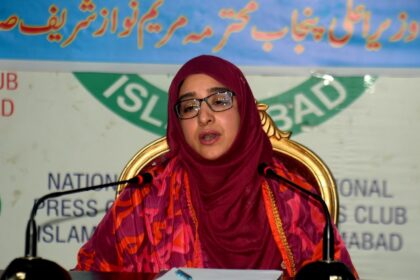





The Centre for Afghanistan, Middle East and Africa (CAMEA) convened the second working session of the Islamabad Conclave to examine Transnational terrorism and emerging security challenges across South Asia. Experts and former diplomats emphasised the need for coordinated regional responses and preventative strategies to address evolving militant networks.
Senator Mushahid Hussain Sayed delivered the keynote address stressing Asia’s shift from unipolarity to multipolarity and highlighting the rise of popular resistance movements in Bangladesh, Sri Lanka and Nepal as part of a broader regional pushback. He warned that cross-border aggression and doctrines such as Akhand Bharat pose serious challenges, and called for public empowerment alongside stronger cooperation on climate, population pressures, health and education. He also welcomed frameworks like the BRI and the SCO anti-terror mechanisms and urged diplomacy over force in dealing with Afghanistan to foster a stable South Asia.
Dr Amina Khan, Director of CAMEA, said that transnational networks have intensified violence in the region as groups forge alliances and replicate tactics. She cautioned that methods resembling ethnic cleansing by unaccountable actors can embolden extremists and argued that states seeking international legitimacy must uphold international norms and counterterrorism commitments to protect regional security.
Ambassador Asif Durrani remarked that definitions of terrorism are often selective and that non-state actors remain persistent threats. Drawing on Pakistan’s long experience, he noted how historical narratives, including the branding of Kashmiri movements decades ago, complicate reconciliation. He urged pragmatic policies grounded in mutual understanding and enhanced regional cooperation for effective counterterrorism.
Dr Hu Shisheng described cross-border militancy as a sophisticated regional problem, particularly acute for Pakistan, and noted that the vast majority of attacks in 2023 occurred in conflict zones shaped by strategic depth and plausible deniability. Militants, he said, exploit unresolved grievances and hardline ecosystems, underscoring that stability depends on transnational cooperation, grievance reduction and expanding economic opportunity.
Dr Shahab Enam Khan warned that ideological extremism is increasingly driven by non-state actors, the weaponisation of resources and manipulation via social and digital media. He underlined that resilience must grow from community-led initiatives, women’s empowerment and institutions that prioritise dignity and inclusive governance, while reiterating that only collective regional action can check the spread of violent ideologies.
Dr Shabana Fayyaz pointed to significant gaps in regional security coordination as militants operate more independently than traditional proxies. She highlighted the complicating presence of groups such as Al Qaeda, ISKP and the IMU along with networks linked to Africa, and emphasised the rising role of technology and the urgent need for improved cyber literacy. Dr Fayyaz called for preventive dialogue and a holistic regional framework to tackle these evolving threats.
The session closed with an engaging question and answer segment that reinforced calls for strengthened regional frameworks, community resilience and pragmatic diplomacy as central tools to confront Transnational terrorism in South Asia.