




At a seminar and book launch in Islamabad, scholars and practitioners argued that the China rise is not aimed at overturning the global order but at reshaping it through gradual reforms and deeper multilateral engagement.
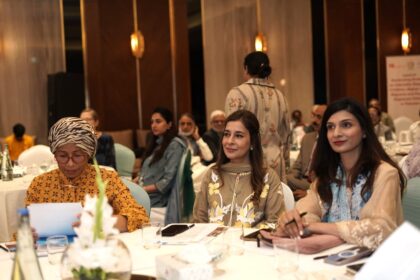
The event at the Institute of Policy Studies featured remarks from Khalid Rahman, Amb (r) Syed Abrar Hussain, Amb (r) Naghmana Hashmi, co-editors Prof Dr Adam Saud and Dr Najimdeen Bakare, Prof Dr Manzoor Afridi and Dr Farhat Taj. Speakers highlighted how China’s approach emphasises equality, non-interference and state-led development while offering the Global South alternatives to Western-dominated norms.
Amb (r) Syed Abrar Hussain said China is moving beyond economic dividends to actively shape global governance, focusing on inclusive policies and partnerships that could drive a second wave of globalisation and technological cooperation tied to the Fourth Industrial Revolution. He also cautioned that challenges remain, including a slowing domestic economy, tightening controls on high-tech exports and rising geopolitical tensions.
Prof Dr Adam Saud described the book as a multi-layered study that moves past the binary status quo versus revisionist debate, noting that the China rise presents an alternative civilisational perspective rooted in Confucian ethics and the idea of a community with a shared future for mankind. Dr Najimdeen Bakare added that China’s state-led model offers distinct normative choices for development, drawing parallels with long-standing theories of civilisational change.
Amb (r) Naghmana Hashmi observed that many contemporary institutions were structured around colonial and post-colonial interests, and the ascent of middle powers has exposed structural limits. Prof Dr Manzoor Afridi traced China’s transition from revolutionary actor to integrated partner, stressing its emphasis on peaceful coexistence and infrastructure-led initiatives often referred to as the Beijing Consensus.
Dr Farhat Taj noted the book’s relevance for policymakers and the wider public, and suggested further investigation into disinformation, hybrid warfare and the role of non-state actors within great-power competition. Khalid Rahman concluded by saying that China’s capacity to operate within its civilisational and value frameworks underpins its global influence and that inevitable multipolarity will offer states greater choices.
Speakers emphasised Pakistan’s need for a multi-alignment strategy to avoid overdependence on any single power, noting that the China rise presents both opportunities and strategic trade-offs for Islamabad as it navigates an increasingly complex international environment.