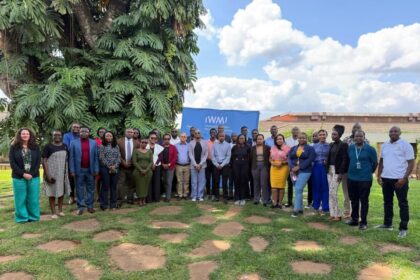




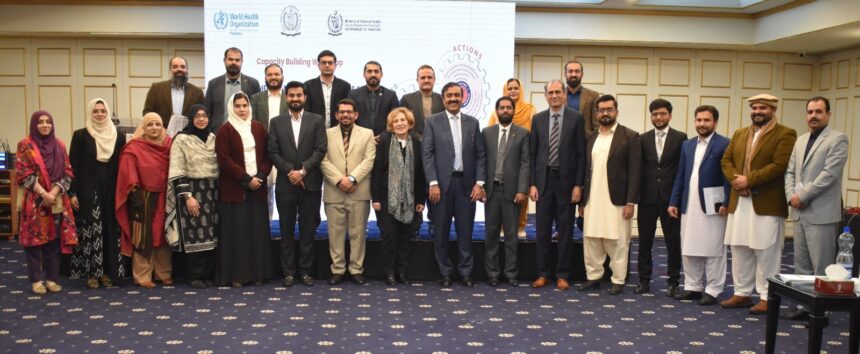
The Drug Regulatory Authority of Pakistan hosted a focused three-day workshop in Islamabad from 02–04 December 2025 to strengthen Market Surveillance and control of substandard and falsified medical products. More than 60 frontline regulators from DRAP, Provincial Drug Control Directorates and Quality Control Laboratory professionals participated in sessions designed to boost operational readiness across the country.
Dr. Obaidullah, CEO DRAP, called for harmonised, risk-based systems aligned with the WHO Global Benchmarking Tool maturity pathways and reiterated a national commitment to integrity and zero tolerance toward substandard and falsified products. Participants were welcomed by Zeeshan Nazir Ch., Director QA< at DRAP, with global perspectives provided by WHO consultant Pantelia Gkoura and Ellen Mpangananji Thom, OIC/Deputy WHO Representative.
Muhammad Sohail, DG Drug Control Punjab, highlighted on-the-ground enforcement challenges and the need for tighter coordination between federal and provincial agencies. Workshop content fused international best practices from regulators such as FDA, EMA and PIC/S with Pakistan’s priority of achieving ML3 readiness under the WHO GBT framework.
Sessions concentrated on practical improvements in Risk-Based Surveillance (PMS), integrated data sharing across GSMS, customs and FIA, and refining laboratory workflows and national recall systems. Emphasis on Market Surveillance was consistent across presentations and exercises to ensure a unified national approach to detection and response.
Regulators engaged in full incident simulations and tabletop exercises that covered the full lifecycle from risk scoring and sampling to laboratory analysis, recall execution and interagency coordination. These hands-on activities were intended to standardise procedures and enhance rapid response capacity in real scenarios.
DRAP reaffirmed plans to expand surveillance capacity, harmonise federal-provincial functions and accelerate progress toward WHO GBT ML3 readiness. The workshop closed with a shared commitment to systemic strengthening and acknowledgement of WHO support, signalling a coordinated national effort to safeguard medicines for Pakistani patients.