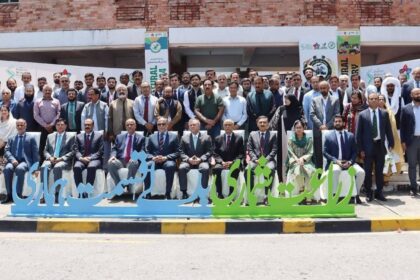





The Institute of Regional Studies convened a focused session on dark web and e-commerce threats in Pakistan under its Cyber Security Program led by Alina Fayaz, drawing diplomats, government officials and international experts to Islamabad to assess rapidly evolving digital drug markets.
Ambassador Jauhar Saleem, president of the institute, warned that greater online access has exposed young people to criminal activity, including easier online purchase and sale of controlled substances. He urged a concerted push to strengthen state capacities, expand training for cyber specialists and modernize investigative agencies such as the FIA while promoting deeper inter-agency knowledge sharing.
Troels Vester, UNODC country representative, described how dark web platforms and encrypted messaging are being used to create organised, e-commerce-style supply chains that make detection more difficult. He noted that sellers increasingly rely on encrypted channels and digital payments to avoid scrutiny and said an effective response must be coordinated, technology-driven and properly resourced to counter e-commerce trafficking.
Oliver Gadney from UNODC headquarters outlined technological tools and investigative approaches that can help trace online trafficking networks and disrupt their financial base. He emphasised the need for law enforcement to adapt continuously to fast-moving digital ecosystems while maintaining compassion for individuals struggling with drug dependency.
Former CND chair Amb. Mansoor Khan highlighted that Pakistan and Afghanistan remain key production and transit areas for opiates feeding regional flows. He warned that students and educational institutions are now prime targets and cited alarming rates of youth use, with nearly 70 percent of drug users in Pakistan under 30. He added that despite strong efforts by the ANF, established maritime, land and air routes combined with sophisticated digital networks keep trafficking channels open.
Summing up the discussion, Ambassador Saleem called for a holistic national strategy pairing stronger border controls and enhanced monitoring with public awareness campaigns, coordinated institutional responses and investment in digital investigation capabilities. Experts at the session reiterated that tackling e-commerce trafficking will require sustained inter-agency cooperation, updated technology and targeted training to protect vulnerable communities across Pakistan.