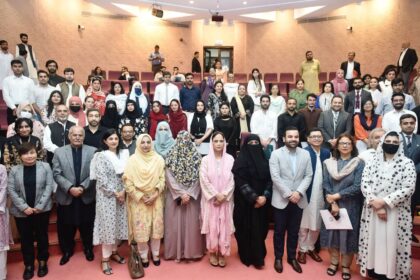
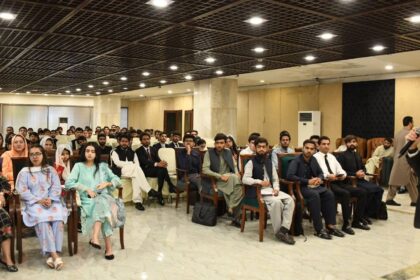
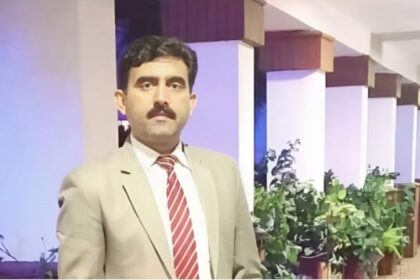
The Institute of Strategic Studies Islamabad (ISSI) recently hosted a public address focusing on the evolving role of the Economic Cooperation Organization (ECO) in regional integration and the challenges posed by shifting geopolitical dynamics. The event gathered leading academics, think-tank experts, and policymakers, with Ambassador Dr. Asad Majeed Khan, Secretary General of ECO, delivering the keynote speech.
Director General ISSI, Ambassador Sohail Mahmood, opened the event by acknowledging a turbulent international environment characterized by great-power rivalry and pressures on globalization. He stressed that while multilateralism faces significant challenges globally, regional organizations like ECO remain relevant and could serve as examples for greater cooperation, particularly in South Asia. Referring to the recent ECO summit in Khankendi, Azerbaijan, he highlighted the significance of a region once defined by conflict now hosting efforts centered on transformation and hope. At the summit, ECO members committed to boosting trade, strengthening transport and digital corridors, fostering energy partnerships, and addressing climate resilience. Despite increased intra-regional trade reaching $96.5 billion, this still represents just 9.1 percent of the region’s total trade, pointing to significant untapped potential.
Ambassador Mahmood also noted persistent issues such as border disputes, terrorism, sanctions on member states, and regional conflicts, including ongoing tensions between Pakistan and India, and the recent Israel-Iran conflict, which have disrupted critical trade and energy corridors. However, he expressed cautious optimism, citing US-mediated reconciliation efforts between Azerbaijan and Armenia as potentially opening new opportunities for regional trade and connectivity.
Emphasizing Pakistan’s pivotal geographic position, Ambassador Mahmood set out three key priorities for ECO: strengthening infrastructure to connect markets, deepening energy cooperation with a focus on sustainability, and advancing digital connectivity to empower young people and foster innovation. He argued that ECO’s regional approach has unique potential at a time when global multilateralism is under significant strain.
In his address, Ambassador Asad Majeed Khan traced the development of ECO from its founding as the Regional Cooperation for Development (RCD) in 1964 to its expansion in 1985 with new member states from Central Asia, Azerbaijan, and Afghanistan. He highlighted ECO’s strong institutional basis rooted in shared cultural, religious, and economic ties, while acknowledging persistent challenges such as uneven infrastructure, legacy trade patterns, and ongoing geopolitical tensions. He stressed that trade remains central to ECO’s mission, with active efforts underway to resolve longstanding issues related to the ECO Trade Agreement and the regional visa scheme.
Ambassador Khan also drew attention to the existential threat of climate change, noting that floods, droughts, and water shortages severely impact development prospects across the region. He advocated for greater collaboration on renewable energy, adaptation, and water management, and called for deeper private sector engagement to supplement government initiatives. Reflecting on the recent summit, he voiced optimism that strong political will, institutional reforms, and enhanced regional cooperation could enable ECO to achieve its founding vision and foster prosperity across its member states.
Former Foreign Minister, Ambassador Inam-ul-Haq, reinforced the need for ECO to develop coordinated regional strategies to tackle challenges like climate change, energy insecurity, and sustainable development, rather than relying solely on national-level efforts. He highlighted the importance of South-South cooperation in pooling resources, sharing expertise, and building collective resilience to confront shared vulnerabilities.
The session concluded with an interactive discussion that covered a broad spectrum of topics, including diplomatic engagement, regional trade, energy partnerships, technological advancement, education, youth empowerment, and emerging non-traditional security challenges. The exchange of views underscored the complex opportunities and hurdles facing ECO in the modern era.
Ambassador Khalid Mahmood, Chairman of ISSI, closed the event by thanking the speakers and participants for their contributions, and presented a commemorative token to Ambassador Asad Majeed Khan.