



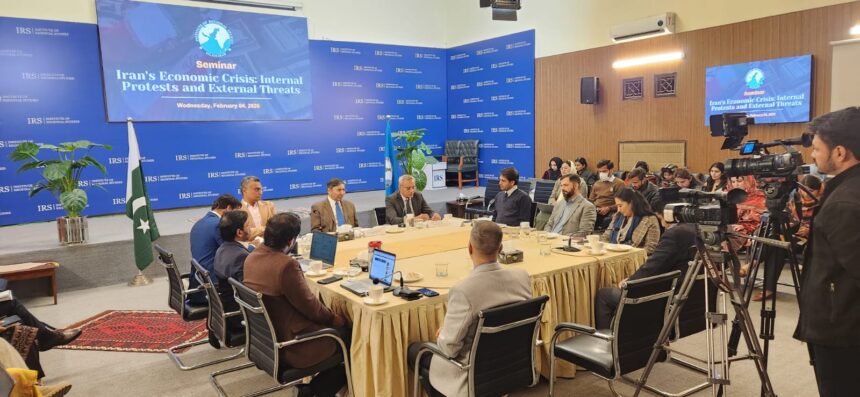
A roundtable at the Institute of Regional Studies in Islamabad brought together analysts to assess the escalating tensions between the United States and Iran and the prospects for diplomacy. Participants warned that the outcome of US Iran talks remains difficult to predict given domestic pressures and regional risks.
Ambassador Jauhar Saleem, president of the Institute of Regional Studies, said dire economic conditions have strained governance in Iran and created openings that external actors such as the US and Israel may try to exploit. He described strong public statements by President Trump as a pressure tactic aimed at forcing Iran to the negotiating table.
Rear Admiral (R) Faisal Ali Shah, a defence analyst, cautioned against viewing Iran solely through a Western lens and stressed that many state institutions are deeply institutionalised. He argued that recent protests largely targeted specific policies rather than seeking to topple the system, and that many citizens prioritised stability and security over external interventions.
Muhammad Hussain Baqeri, chairman of the Iqbal Forum, said Iranian society is in a transitional phase shaped by shifting political and social dynamics and underscored the need for comprehensive security policies to secure long-term social stability.
Alireza Nader, speaking from Washington D.C., noted pressure from elements of the Iranian diaspora on the US to take decisive action but warned that any military strike carried a high risk of escalation into a broader regional conflict. He acknowledged a limited opening for diplomacy while saying major concessions were unlikely.
Jawed Rana, editor of The Counter Narrative, argued that Iranian institutions remain resilient and capable of containing economic unrest. He suggested that while some external actors may view internal instability as an opportunity, a large-scale war appears unlikely; however, he conceded that a limited strike remains possible if negotiations collapse.
Speakers agreed that uncertainty surrounding US Iran talks has clear regional implications, including for Pakistan, where policymakers and security planners are watching developments closely. The panel urged measured diplomacy and restraint to avoid unintended escalation and to safeguard regional stability.