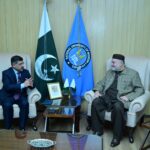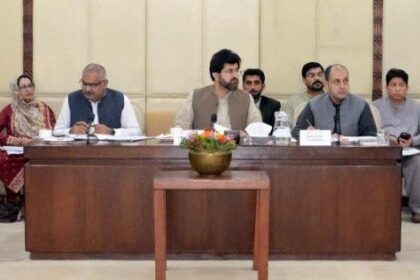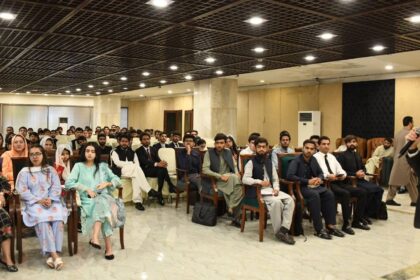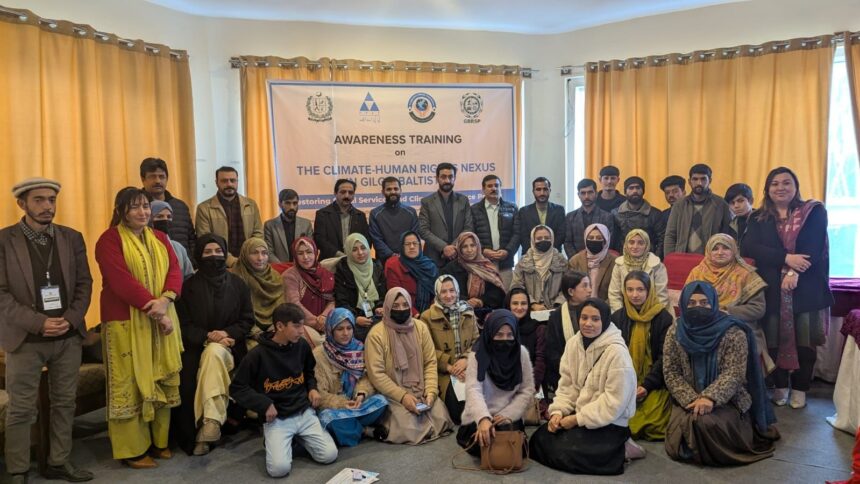
The Progressive Climate Foundation (PCF), together with the Gilgit-Baltistan Rural Support Programme (GBRSP) and with support from the Pakistan Poverty Alleviation Fund (PPAF), convened the first Climate Human Rights Nexus Dialogue in Gilgit-Baltistan on February 10, 2026 at Osis Hotel, Gilgit. The event brought policymakers, youth leaders, environmental experts, civil society members and academics into a focused conversation on climate-driven risks and human rights.
Participants examined the intersection of climate change and fundamental rights with particular attention to glacier preservation, local climate resilience and youth empowerment. The dialogue emphasized the urgent need for rights-based approaches that protect vulnerable mountain communities while enabling local leadership in adaptation planning.
Manzoor Qureshi, Program Manager at GBRSP, and Khadim Hussain, Director at GB-EPA, underscored the region’s critical glaciological importance, noting that of Pakistan’s nearly 13,000 glaciers roughly 8,400 are located in Gilgit-Baltistan. Their remarks highlighted how glacier health is directly linked to livelihoods, water security and long-term resilience across the region.
Imran Khan Rana, Secretary of PRCS, framed many climate impacts as human rights challenges, stressing that displacement, resource stress and loss of life and livelihood require protection measures grounded in rights and dignity. Ahbab Ullah Qureshi, President of PCF Gilgit-Baltistan, led an interactive workshop that engaged youth, community representatives, government officials and media stakeholders in collaborative solution-building.
The event was addressed by Syed Adil Ali Shah, Minister for Sports, Culture & Youth Affairs, GB, who served as chief guest and encouraged youth-led environmental initiatives while praising the cross-sector collaboration behind the dialogue. Attendees left with a sharpened focus on actionable steps to integrate climate and rights agendas in local planning.
The dialogue marks an important step toward advancing climate justice and rights-based resilience in Gilgit-Baltistan’s mountain communities, reinforcing the role of local youth and institutions in safeguarding glaciers and securing durable adaptation. Continued collaboration between civil society, government and youth will be essential to translate the dialogue into tangible protection for affected communities under the broader Climate Human Rights agenda.