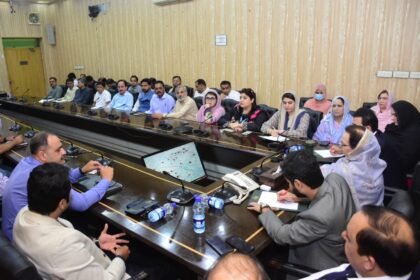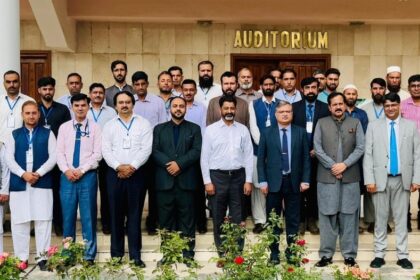




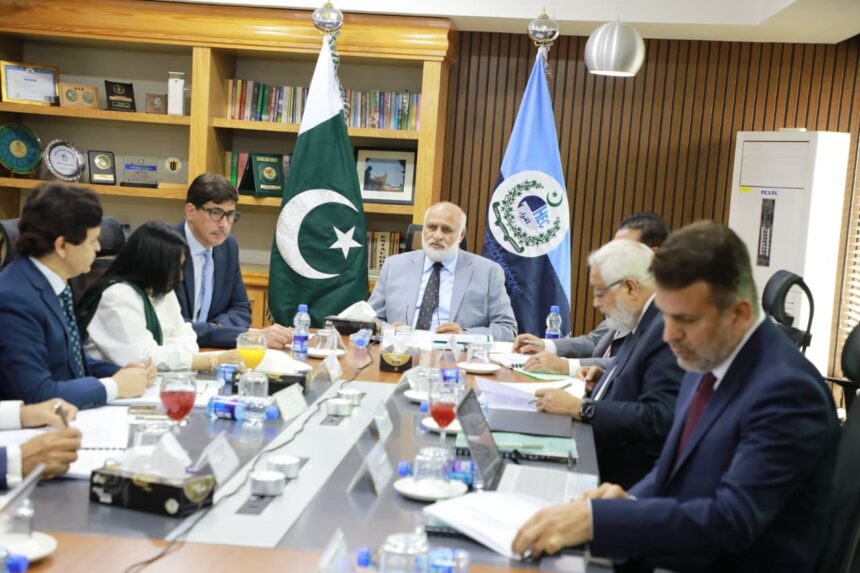
The 13th urgent meeting of the Commission, the Higher Education Commission’s apex governing body, convened recently to review key aspects of the country’s higher education landscape. The session was presided over by Prof. Dr. Niaz Ahmad Akhtar, marking his first meeting as Chairman HEC since assuming charge, and set the tone for renewed focus on institutional quality and governance.
During the HEC meeting the Commission discussed strategic challenges and opportunities facing Pakistan’s universities and stressed the need for stronger, more robust systems and policies to deliver on higher education mandates. Emphasis was placed on structural integrity, academic excellence and innovation as pillars for building a globally competitive educational ecosystem.
The vision put forward at the meeting received collective support from the distinguished members in attendance, including Executive Director HEC Dr. Zia Ul Haq, Mr. Nadeem Mahbub, Dr. Syed Sohail H. Naqvi, Dr. Sarwat Ismail, Dr. Sarosh Hashmat Lodi, Dr. Sumaira Rehman, Mr. Saleh Muhammad Baloch, Engr. Dr. Ehsanullah Kakar, Dr. Arabella Bhutto, Dr. Samreen Hussain, Dr. Farid Ahmad Khan, Dr. Syed Zahoor Hassan, Dr. Zahoor Ahmed Bazai, Ms. Mahwish Faraz Lakhani, Dr. Imran Ullah Marwat and Dr. Muhammad Aurangzeb Khan.
Participants deliberated at length on practical measures to reinforce policy frameworks and enhance quality assurance mechanisms across universities. The HEC meeting highlighted a coordinated approach to drive reforms that strengthen governance, support research and align academic programs with international benchmarks.
With this first session under Prof. Dr. Niaz Ahmad Akhtar’s leadership, the Commission signalled a clear commitment to advancing higher education standards in Pakistan through policy refinement, institutional oversight and sustained emphasis on quality assurance.