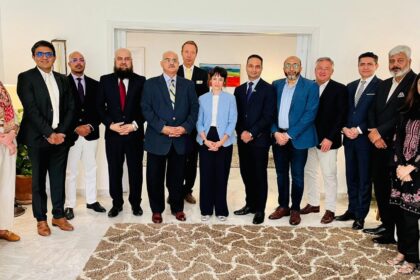





A seminar in Islamabad convened by the Institute of Policy Studies on September 28 warned that expanding Hindutva networks and transnational diaspora politics are driving a rise in Islamophobia and posing new risks to pluralism and peace. The event brought together scholars, diplomats and policy analysts to examine how these networks operate and impact communities at home and abroad.
Khalid Rahman, chairman of IPS, opened the session by noting the Rashtriya Swayamsevak Sangh marked its centenary on September 27 and highlighting the steady mobilization of Hindutva organisations under cultural guises. He pointed to the movement’s organisational discipline, extensive grassroots reach, political influence through the BJP, expansion of affiliate groups, community activities and efforts to shape educational and cultural narratives as key factors in its domestic consolidation and overseas outreach.
Dr Mujeeb Afzal described Hindutva as primarily a political phenomenon that constructs identity in opposition to Muslims. He outlined the operational strategies used within India and across diasporas, arguing that the phenomenon uses transnational ties to amplify Islamophobic narratives and influence public discourse abroad.
Dr Khurram Iqbal stressed the security and societal consequences of this trend, saying the Hindutva diaspora in the Global North provides funding and lobbying support for activities inside India while spreading divisive rhetoric internationally. He observed that such efforts may face limits in Western societies where racial identity dynamics differ, and drew analytical parallels between expansionist ideas such as Akhand Bharat and other global projects, citing recent regional developments as prompting greater awareness of these dangers.
Ambassador (r) Sohail Mahmood warned that these transnational linkages create tangible threats for Muslim communities and the Pakistani diaspora. He urged sustained dialogue and global solidarity to counter Islamophobia and noted that many within the Hindu community reject extremist interpretations. Emphasising pluralism and justice as foundations for stability, he cautioned against the convergence of Hindutva networks with broader international security narratives, including concerning responses to the Gaza situation.
Speakers highlighted implications for Indian Illegally Occupied Jammu and Kashmir and the wider Muslim diaspora, calling on policymakers, academics and diplomats to recognise the growing transnational dimensions of Hindutva networks. They recommended framing Islamophobia and associated violent ideologies in terms that resonate with international audiences and urged coordinated policy responses to protect pluralism and counter hate-driven politics.