




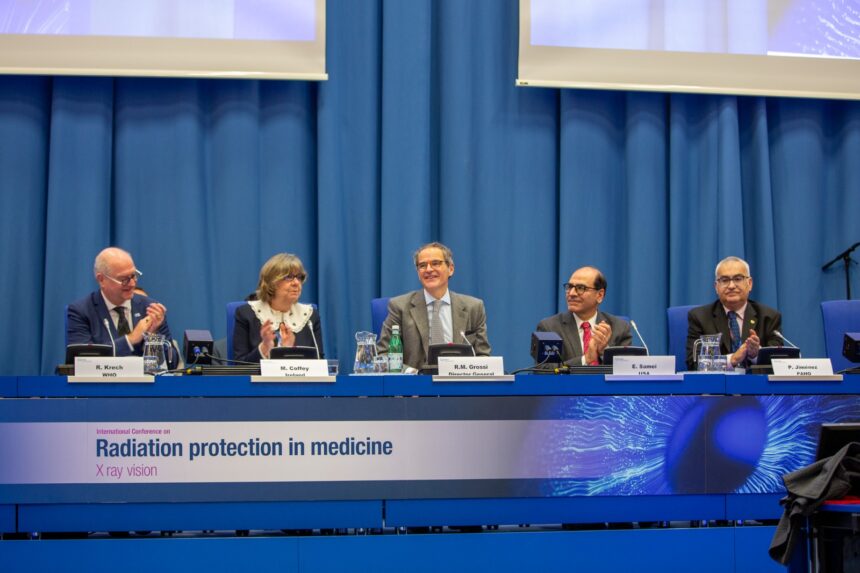
Global health experts have convened at the IAEA headquarters in Vienna this week for #RadSafe2025 to advance radiation safety in medicine and set a forward-looking strategy for safer imaging and therapy.
More than 650 specialists from over 120 countries are reviewing progress since the Bonn Call for Action and identifying priorities to adapt regulation and clinical practice as new technologies reshape exposure patterns.
Rafael Mariano Grossi, Director General of the IAEA, said that “new imaging technologies, radiopharmaceuticals, digital systems and AI are transforming clinical practice. These advances bring enormous benefits, but they also change exposure patterns and create new challenges for regulators and health professionals. We must keep up to ensure these advancements and new technologies are employed safely. Initiatives like IAEA’s #RaysOfHope are helping broaden access to these technologies while strengthening capacity worldwide.”
Working together with the World Health Organization and PAHO-WHO, the meeting aims to shape a shared vision for radiation safety that balances innovation with protection. For Pakistan, the strategies emerging from Vienna could inform efforts to improve patient protection, regulatory oversight and workforce training as the country expands medical imaging and therapy services.
The #RadSafe2025 review will help translate the Bonn Call for Action into practical steps to monitor shifting exposure patterns, strengthen national systems and ensure that advances in medical technology are matched by robust radiation safety measures across the region.