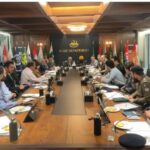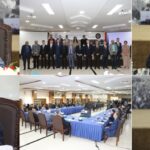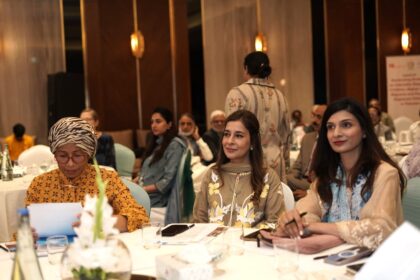




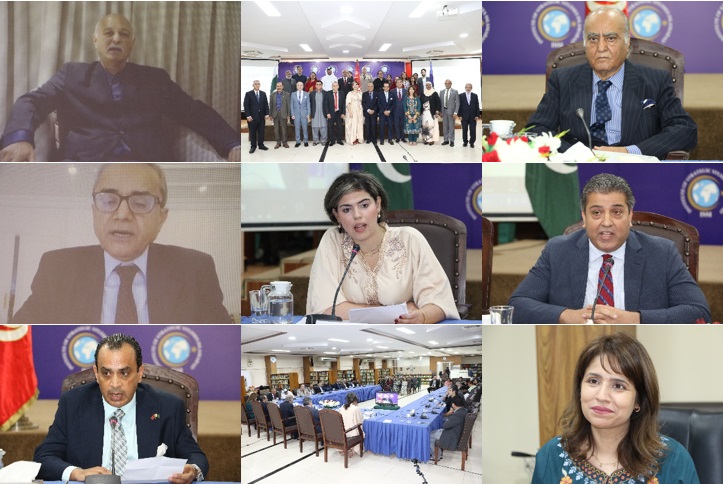
In Islamabad the Centre for Afghanistan, Middle East & Africa (CAMEA) at the Institute of Strategic Studies Islamabad, in collaboration with the Pakistan Africa Institute for Development and Research (PAIDAR) and the Embassy of Tunisia, marked Tunisia independence on March 30, 2026. The programme opened with the national anthems of Pakistan and Tunisia and was moderated by Dr. Amina Khan, director of CAMEA.
Speakers at the event included Ambassador Khalid Mahmood, chairman Board of Governors ISSI; the chief guest Senator Mushahid Hussain Sayed, president PAIDAR; Ms. Dorsaf Maaroufi, Charge d’Affaires of Tunisia to Pakistan; Ambassador Javed Ahmed Umrani, the ambassador of Pakistan to Tunisia; Mr. Ammad Rasheed, Honorary Consul General for Tunisia Khyber Pakhtunkhwa; and Mr. Mohammad Hameed, Honorary Consul General Punjab.
Ambassador Khalid Mahmood noted that the 70th anniversary underlines the resilience and determination of the Tunisian people and recalled the historic bond between Pakistan and Tunisia since diplomatic ties were established in 1957. He highlighted that while bilateral trade remains modest, there is clear potential to expand commerce in textiles, pharmaceuticals, agriculture and manufacturing, supported by institutional mechanisms such as the Joint Ministerial Commission and Bilateral Political Consultations and by leveraging opportunities under the African Continental Free Trade Area.
Dr. Amina Khan described the Tunisia independence milestone as a celebration of political sovereignty and sustained economic transformation. She emphasised that CAMEA, under Pakistan’s Engage Africa policy, has begun to mark national days of African countries to reinforce people to people ties, and that the event was organised in partnership with the Embassy of Tunisia to underscore shared commitment to strengthening bilateral relations.
Senator Mushahid Hussain Sayed praised Tunisia’s leadership in African politics and recalled Pakistan’s early support for Tunisian self-determination. He noted Tunisia’s historical role in offering sanctuary to the PLO in the 1990s and highlighted common positions on Palestine. Calling for deeper trade, education and cultural exchanges, he urged enhanced business and people to people linkages as both countries pursue a stronger role within the Global South.
Ms. Dorsaf Maaroufi underlined strong historical ties and Tunisia’s appreciation for Pakistan’s support at the United Nations. She urged boosting trade using the Preferential Trade Agreement, expanding cultural and tourism links, and exploring Tunisia’s organic olive oil expertise as a practical area for cooperation that can benefit Pakistan under enhanced trade arrangements.
Ambassador Javed Umrani said bilateral ties continue to strengthen with trade on an upward trajectory. He highlighted active engagement between business communities, including a 17-member Pakistani delegation that visited Tunisia last year where productive meetings and several memoranda of understanding were signed, while stressing that both sides must work harder to realise the full economic potential.
Mr. Ammad Rasheed and Mr. Mohammad Hameed emphasised on-the-ground efforts to deepen ties through trade, tourism and cultural exchange. Mr. Rasheed described initiatives in Peshawar and across Khyber Pakhtunkhwa to raise awareness of Tunisia as a gateway to Europe and Africa, while Mr. Hameed urged swift conclusion of trade agreements to unlock opportunities in textiles and recommended technology transfer in olive oil production to benefit Pakistani industry.
Speakers agreed that commemorating Tunisia independence should be followed by concrete steps to convert diplomatic goodwill into expanded trade, educational exchanges and cultural cooperation, reinforcing a partnership that serves mutual economic and strategic interests.