



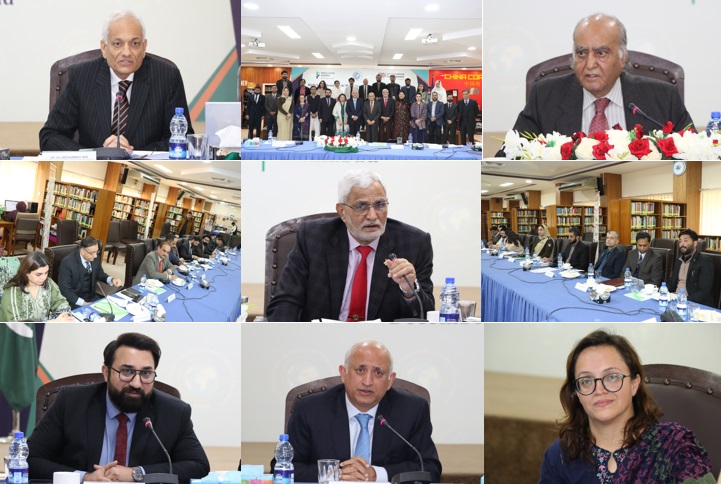
The Institute of Strategic Studies Islamabad, in partnership with the Population Council Pakistan, convened a high-level roundtable of senior policymakers, security analysts and development practitioners to examine rapid population growth and its security implications for Pakistan.
Dr. Ali Muhammad Mir, Senior Director for Programs and Research at the Population Council Pakistan, opened the session by noting that Pakistan’s population crossed 256 million in 2025 with a growth rate exceeding 2.1 percent. He warned that the speed of population growth is outpacing the state’s ability to deliver health, education, employment, housing, water and energy, and cautioned that an unchecked youth bulge could erode human capital, social cohesion and governance capacity.
Ambassador Khalid Mahmood, Chairman of the ISSI Board of Governors, highlighted how demographic pressures affect governance, resource management and national resilience. Drawing on lessons from Bangladesh, Indonesia and Vietnam, he urged sustained investments in education, health and family planning and recommended integrating population considerations into long-term planning to strengthen Pakistan’s stability and competitiveness.
Mr. Ali Mazhar of the Population Council outlined key national trends including high fertility, a large youth cohort, widespread out-of-school children, low female labour force participation and stark regional disparities particularly in Balochistan. He introduced the Tawazun or Balance Narrative, which promotes informed and voluntary family decision-making, universal access to family planning and aligning population growth with available resources as part of a broader consultative effort.
Dr. Neelum Nigar of ISSI placed population growth within contemporary security literature, describing it as a risk multiplier that intensifies human security pressures when governance capacity lags. She acknowledged that Pakistan’s National Security Policy adopts a human-centric approach but noted persistent implementation gaps, policy incoherence and institutional constraints that hinder effective response.
During a moderated panel, Air Marshal (Retd.) Farhat Hussain warned that large numbers of out-of-school and unemployed youth undermine human development and increase vulnerability to instability and violent extremism. Mr. Haroon Sharif provided a political economy perspective, pointing to declining growth rates, constrained fiscal space, rising debt servicing and insufficient job creation, and called for depoliticized, evidence-based policymaking, innovative financing for youth employment and a shift toward skills and technology-driven growth.
Participants from academia, policy institutions and civil society urged a comprehensive human security approach linking population growth to water scarcity, food security, climate vulnerability, urbanisation and irregular migration. They identified fragmented policymaking, weak implementation and underinvestment in health and education as core obstacles and called for stronger data systems, institutional coordination and sustained engagement with religious leaders, media and youth to advance a balanced, rights-based population discourse.
Concluding the dialogue, attendees agreed that rapid population growth amplifies Pakistan’s existing security, governance and development challenges and stressed the need for renewed political commitment, institutional coordination and strategic foresight. The consensus was clear that demography is not destiny and that policy choices — from family planning access to economic and governance reforms — will determine whether population growth becomes a source of national strength or a driver of risk.