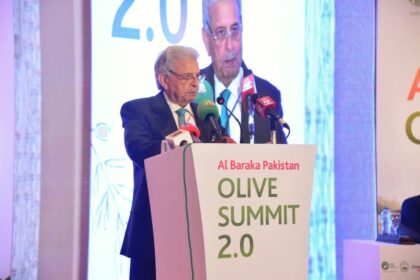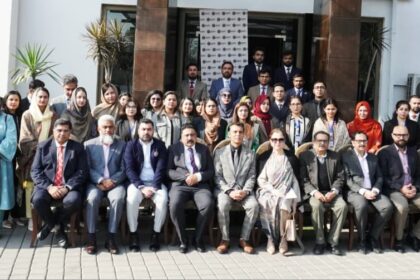





Islamabad hosted an international workshop on October 7, 2025, organized by the OIC Standing Committee on Scientific and Technological Cooperation COMSTECH to explore how metabolomics and artificial intelligence are transforming diagnostic testing. More than 200 participants from around the world joined the sessions both in person and online, reflecting strong interest in metabolomics as a practical tool for precision medicine.
Prof. Dr. M. Iqbal Choudhary, Coordinator General COMSTECH, inaugurated the workshop and welcomed the global audience and the keynote speaker. He underscored the growing importance of integrating AI across scientific disciplines and highlighted how such advances can strengthen biomedical research and healthcare delivery in Pakistan and the wider OIC region.
The keynote lecture was delivered by Mr. Javed Iqbal Khan, a forensic scientist and biochemist with over three decades of experience in the United States. Mr. Khan holds an MSc in Biochemistry and Molecular Biology from the University of California, Riverside, and an earlier MSc in Biochemistry with a minor in Microbiology from the University of Agriculture Faisalabad. His professional record includes service as a forensic scientist at the California State Department of Justice, testimony in more than 500 court cases, and current consultancy roles with the Attorney Information Exchange Group and the Utah State Attorney General’s Office.
In his detailed presentation Mr. Khan introduced participants to the principles of metabolomics and described the field as the most dynamic layer of the biological Pyramid of Life, where genomics and proteomics meet functional metabolic profiles. He noted that only seven percent of cancers are hereditary, with the majority linked to environmental and lifestyle factors, and explained how metabolomics captures the influence of diet, environment, and physiology on disease processes.
Mr. Khan further explained how AI-powered metabolomic analysis enables earlier disease detection, more personalised treatment planning, and improved clinical outcomes by turning complex biochemical signatures into actionable clinical insight. The discussion highlighted practical pathways for integrating metabolomics and DiagnosticAI into research workflows, data interpretation pipelines, and healthcare systems.
During the interactive question and answer session participants engaged on topics ranging from data standardisation and computational models to clinical validation and ethical considerations. Speakers and attendees considered how metabolomics can be adopted in laboratories and hospitals in Pakistan to support cancer diagnostics and other disease areas influenced by environmental and lifestyle factors.
In closing Dr. Ismalia Diallo, COMSTECH Regional Advisor for OIC Africa, summarised the lecture by emphasising the diagnostic value of metabolomics and the environmental and dietary drivers of disease onset. The workshop concluded with closing acknowledgments and a networking hi tea that allowed researchers, clinicians, and policy advisors to discuss collaborative opportunities in metabolomics and DiagnosticAI for the region.