




The National Institute of Health has issued an advisory on CCHF ahead of Eid al-Adha, urging provincial health authorities and the public to take timely measures to reduce the risk of transmission during increased animal movement and human contact.
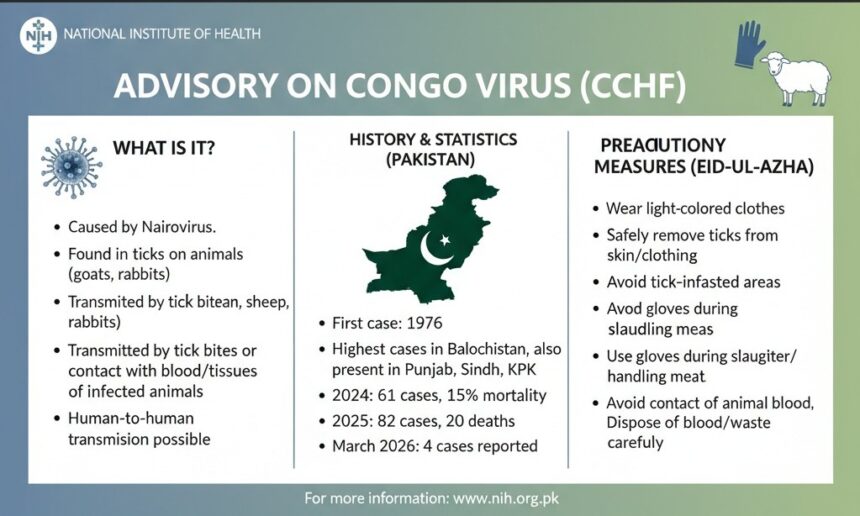
According to the advisory, CCHF is caused by a nairovirus and is carried by ticks that often hide in the hair of animals such as goats, sheep and rabbits. The virus can be transmitted to people through a tick bite or by contact with the blood or tissues of infected animals during and immediately after slaughter, and human-to-human transmission from an infected person to a healthy person is also possible.
Pakistan recorded its first confirmed CCHF case in 1976. The advisory notes that Balochistan continues to report the highest number of cases compared with other regions, although cases are regularly reported from Punjab, Sindh and Khyber Pakhtunkhwa as well.
In 2024 the country reported a total of 61 confirmed CCHF cases with a case fatality rate of 15 percent. Reported cases rose to 82 in 2025 with 20 deaths, and to date in March 2026 four cases have been reported.
With animal transport and public interaction with animals rising during Eid, the advisory stresses heightened vigilance for CCHF. The National Institute of Health recommends practical precautions to lower risk and protect workers and families involved in animal handling.
People are advised to wear light-coloured clothing so ticks are easier to spot, remove any ticks found on skin or clothing using safe methods, and avoid areas known to have heavy tick infestations. When slaughtering animals or preparing meat, use gloves and take care to avoid contamination with animal blood; dispose of blood and offal safely to prevent further spread of the virus.
The full advisory is available on the National Institute of Health website at www.nih.org.pk, and local health authorities have been asked to coordinate timely preventive measures and public information to reduce CCHF risk during the Eid period.