




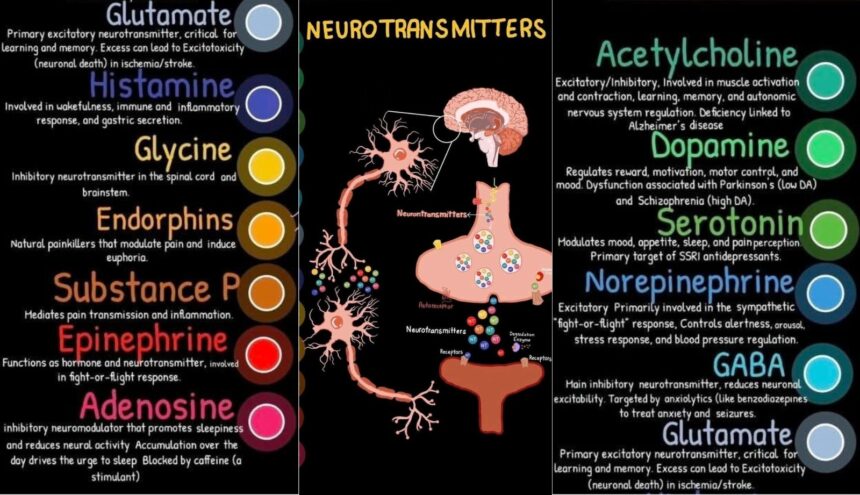
Your thoughts, mood, energy, motivation, sleep and focus arise from a continuous chemical conversation in the brain. These chemical messengers, known as neurotransmitters, translate electrical impulses between neurons and shape everyday experience. Understanding neurotransmitters helps explain why changes in lifestyle, diet or medication can quickly alter mental state and cognitive performance.
Dopamine, Serotonin and endorphins act as regulators of mood, motivation and pleasure. Dopamine drives goal-directed behaviour by reinforcing anticipation and reward, and plays a central role in movement and mood regulation. Serotonin helps stabilise mood, appetite and sleep cycles, and is a common target for antidepressant treatment. Endorphins, produced during exertion or stress, reduce pain and can produce euphoria, the so-called natural painkillers of the body. Imbalances in these regulators often present as depression, anxiety or changes in motivation long before structural illness appears.
A separate group of excitatory chemicals keeps the brain alert and ready to learn. Acetylcholine supports learning, memory and muscle activation and is closely tied to cognitive decline when deficient. Norepinephrine promotes vigilance and arousal and helps the body respond to stress, while epinephrine acts quickly to drive the fight-or-flight response. The amino acid glutamate is central to learning and neuroplasticity, but excess glutamate can cause excitotoxicity and neuronal damage in conditions such as stroke.
To prevent runaway activity the brain relies on inhibitory signals. GABA is the principal inhibitory transmitter, producing calm and reducing neuronal excitability; it is the target of many anxiolytic and anticonvulsant drugs. Adenosine accumulates with cellular activity to create sleep pressure and is the reason caffeine promotes wakefulness by blocking its receptors. Glycine provides inhibitory control in the spinal cord and brainstem, contributing to motor coordination and sensory processing.
Other chemicals maintain defence and the body’s response to harm. Histamine in the brain supports wakefulness and also links neural activity with immune responses, which explains the drowsiness caused by some antihistamine medicines. Substance P transmits pain signals and mediates inflammation, alerting the brain to tissue damage.
These neurotransmitters operate at the synapse, a tiny gap between neurons where messages are sent, received and cleared. Electrical impulses trigger vesicles to release neurotransmitters into the synaptic space, the molecules bind to specific receptors on the receiving neuron, and the signal is terminated by enzymatic breakdown or reuptake for recycling. This precise timing and balance determine whether networks remain calm, become alert, or shift into protective states.
Balance rather than simply more or less of any single chemical is the core lesson. Supporting healthy neurotransmitter function through balanced nutrition, regular activity, sleep hygiene and, when needed, appropriate medical care can improve cognitive performance and emotional resilience. For clinicians, patients and families in Pakistan this chemical perspective underscores that many mental health and cognitive complaints have biological roots that respond to targeted lifestyle, psychosocial and clinical interventions.