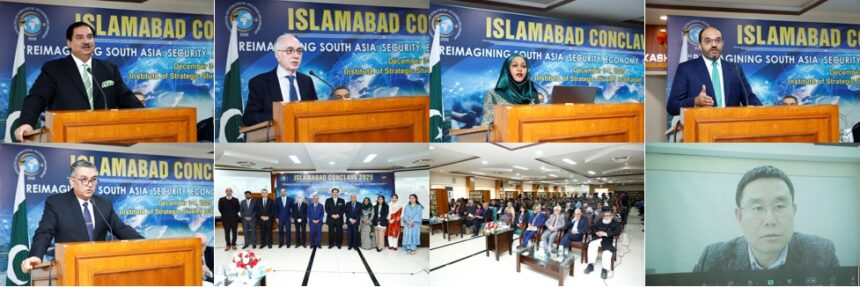
The China Pakistan Study Centre at the Institute of Strategic Studies Islamabad hosted the fifth session of the Islamabad Conclave focusing on regional connectivity, bringing together senior diplomats, academics, and policy experts to discuss multilateral pathways for collective growth across South Asia.
In his keynote remarks, Mr Khurram Dastgir Khan underlined Pakistan’s strategic commitment to inclusive, rules based and forward looking regional connectivity rooted in geo economic cooperation. He observed that while demand for deeper integration across South Asia is growing, connectivity remains underdeveloped at many levels and requires credible leadership to translate potential into tangible progress.
Mr Khurram Dastgir drew attention to expanding ties with the Central Asian Republics and urged regional actors to overcome hostile dynamics, noting that tensions emanating from India and instability in Afghanistan continue to impede meaningful integration. He praised China’s role in promoting win win cooperation and described CPEC as a transformative model that Pakistan should leverage to broaden sub regional connectivity and strengthen its long term geo economic posture.
Dr Talat Shabbir, Director of the China Pakistan Study Centre and session moderator, stressed the need for structured regional cooperation in an era of global fragmentation, highlighting Pakistan’s strategic location as a catalyst for shared prosperity and integration across neighbouring regions.
Ambassador Masood Khalid emphasised BRI and CPEC as central drivers of South Asian connectivity and urged the development of practical, inclusive frameworks with regional partners. He recommended greater use of China led mechanisms and regional platforms such as CAREC and ECO to close development gaps and build trust through economic integration.
Prof Dr Zhang Jiadong discussed China’s Global Development, Security and Civilization Initiatives and their relevance to South Asia, calling for strengthened sub regional cooperation, climate partnerships, digital integration and inclusive narratives to unlock the region’s potential. Dr Aminath Sudha highlighted the value of robust multilateral institutions and inclusive approaches, arguing that complementarity rather than competition should form the basis of comprehensive connectivity frameworks.
Mr Syed Hassan Akbar outlined how Pakistan can reinvigorate its geo economics agenda by leveraging strategic geography, maritime assets and emerging partnerships to boost technology, investment and knowledge driven connectivity linking South Asia, Central Asia and ASEAN. He reiterated concerns about India’s reluctance to embrace a more inclusive regional vision while commending China’s constructive role in promoting cooperative arrangements.
The session concluded with mementos presented to the speakers by Ambassador Khalid Mahmood, Chairman Board of Governors ISSI, as participants underlined the immediate need to translate dialogue on regional connectivity into actionable, multilateral projects that advance economic integration and stability across the region.