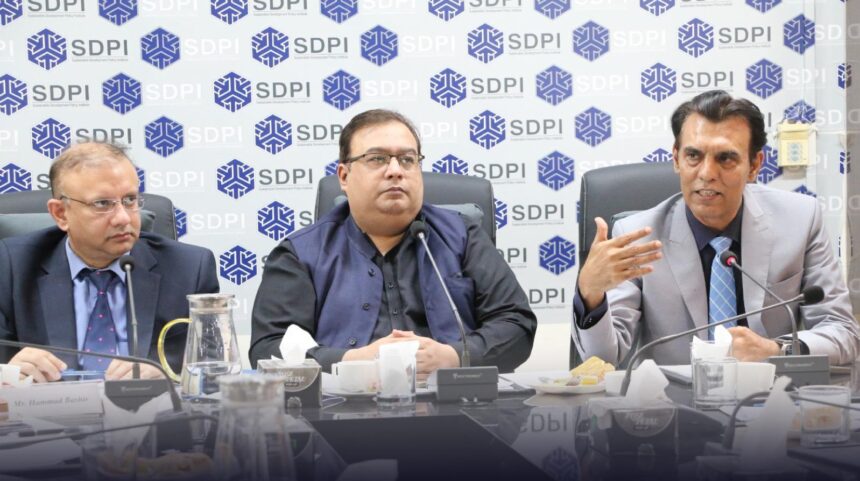
A consultative workshop in Islamabad called for urgent development of indigenous capacities to implement a robust carbon trading mechanism, stressing inclusive public and private sector participation under Article 6 of the Paris Agreement. The event, organised by the Sustainable Development Policy Institute in partnership with the Pakistan German Climate and Energy Partnership, highlighted emerging international opportunities and the need for stronger institutional preparedness.
Dr. Abid Qaiyum Suleri, Executive Director of SDPI, said Pakistan’s carbon market policy framework is evolving and stakeholder feedback will be critical to refine implementation strategies and close operational gaps. He noted that recent geopolitical shifts and the Middle East energy crisis may slow carbon-market momentum temporarily, but such a transition period offers Pakistan time to strengthen accounting systems, improve MRV frameworks, and prepare high-quality mitigation projects for future carbon trading.
Participants emphasised that continued dialogue is essential to keep stakeholders informed about global climate-policy developments and to ensure Pakistan remains well positioned to benefit from international carbon trading opportunities. Strong private-sector engagement and clear authorization systems were highlighted as prerequisites for credible participation in both Article 6 mechanisms and voluntary carbon markets.
Ayhan Mustafa Bhutto, Special Secretary of the Environment Climate Change and Coastal Development Department of Sindh, detailed provincial initiatives already being advanced for potential carbon-credit frameworks. Sindh’s portfolio includes mangrove restoration projects benefiting around 5,000 households, wind-energy installations, shrimp farming, riverine afforestation, methane generation from cattle dung and improved cookstove programmes submitted to the federal climate ministry. He argued that building local third-party monitoring and verification capacity would reduce project costs and urged stronger coordination between the Ministry of Climate Change and the private sector to produce practical legislation.
Zainab Naeem, Head of the Sustainability and Circularity Unit at SDPI, underlined that environmental integrity must remain central to carbon trading, especially in voluntary markets where greenwashing remains a risk. She recommended robust accounting frameworks and transparent authorization to protect credibility and ensure equitable benefits for developing countries, adding that carbon trading can lower mitigation costs, support SMEs and attract private investment in climate-friendly technologies.
Hammad Bashir, Carbon Markets Expert at the Ministry of Climate Change and Environmental Coordination, explained how carbon credit projects can make otherwise unviable initiatives feasible, citing waste-heat recovery in cement plants as a practical example where carbon finance improves project economics. He said the government is prioritising forestry and waste-management sectors for their high mitigation potential and indicated that carbon trading efforts will target half of the conditional components of Pakistan’s NDCs. He also noted the differing dynamics of voluntary and compliance markets and suggested compliance market trends may push credit prices upward.
Ahsan Kamran, Senior Technical Consultant, clarified distinctions between Article 6.2, which enables direct adjustments in national accounts, and Article 6.4, which establishes a UN-supervised global crediting mechanism. He pointed to more than 100 bilateral agreements underway and named European states, Singapore and South Korea among leading buyers. Singapore’s current policy allowing companies to offset up to five percent of taxable emissions through international credits was cited as a concrete demand signal that could create supplier opportunities for Pakistan. Kamran identified transport electrification, battery-integrated rooftop solar, waste-to-energy systems and improved cookstove distribution as strong project types for carbon trading while warning that EV charging supplied by fossil-fuel power reduces net mitigation unless paired with solarised charging.
Speakers converged on the need to use the current window to build robust MRV systems, scale up project pipelines and establish indigenous third-party verification to lower costs and uphold environmental integrity. Strengthening these foundations will be key for Pakistan to convert Article 6 prospects into tangible climate finance and development gains through effective carbon trading.