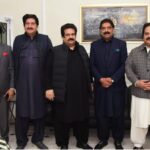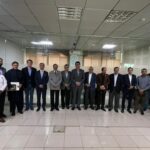




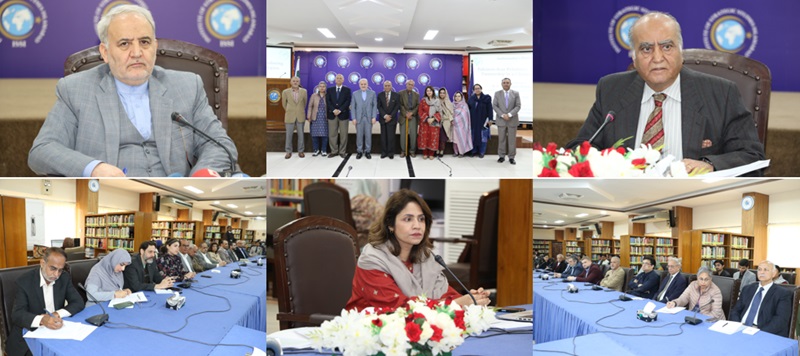
The Centre for Afghanistan, Middle East and Africa (CAMEA) at the Institute of Strategic Studies Islamabad (ISSI) hosted a public talk under its Ambassador’s Platform that brought together senior diplomats, policymakers and civil society to discuss Pakistan Iran relations. Speakers included H.E. Reza Amiri-Moghaddam, Ambassador of the Islamic Republic of Iran to Pakistan, Ambassador Khalid Mahmood, Chairman of ISSI’s Board of Governors, and Dr. Amina Khan, Director CAMEA.
H.E. Reza Amiri-Moghaddam highlighted the deep ties between the two neighbours, noting a common border and a combined population of nearly 350 million people that supports robust people-to-people contact. He pointed to complementary economic structures and a strategically significant geography as drivers for mutually beneficial cooperation, and said Pakistan Iran relations reflect closely aligned positions on key regional matters such as Palestine, while also calling for stronger collaboration to address terrorism and separatist movements.
The ambassador underscored shared regional engagement and mutual diplomatic support through platforms including the Shanghai Cooperation Organisation, the Organisation of Islamic Cooperation, the Economic Cooperation Organization and the D-8. He described the current phase as one of the most constructive in recent decades, citing over 25 high-level delegations in two years and the signing of 25 agreements and memoranda of understanding across diverse sectors, along with two presidential visits and exchanges by other senior officials.
On economic prospects, he observed that Pakistan and Iran already represent a market of nearly two billion people when regional partners are included, with further scope if Türkiye’s markets are factored in. He stressed that Pakistan Iran relations rest on a foundation of shared history, cultural affinity and common strategic interests that can underpin deeper trade and connectivity.
Ambassador Khalid Mahmood recalled historical ties, noting that Iran was among the first countries to recognise Pakistan and supported it during the 1965 and 1971 conflicts, reflecting longstanding solidarity. He acknowledged that the relationship has faced difficult phases but said both countries are currently closer than before, while also recognising ongoing challenges such as terrorism and sectarianism and a shared commitment to pursue peaceful solutions in a changing regional environment.
Dr. Amina Khan emphasised that bilateral ties are grounded in geographic proximity and intertwined security and economic interests. She described recent engagement as forward-looking, with close coordination on developments in Afghanistan and strong alignment on the crisis in Gaza. She noted Pakistan’s strong condemnation during last year’s 12-day Israeli aggression, calling the strikes against Iran ‘reckless’ provocations that threaten regional stability and violate sovereignty and international law.
The discussion, attended by diplomats, academics, students, practitioners and members of civil society, reflected on the strategic importance of sustained high-level interaction and concluded with an engaging question and answer session that explored avenues for enhanced cooperation in trade, security and people-to-people exchanges within the framework of Pakistan Iran relations.