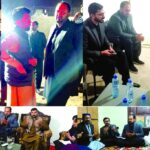




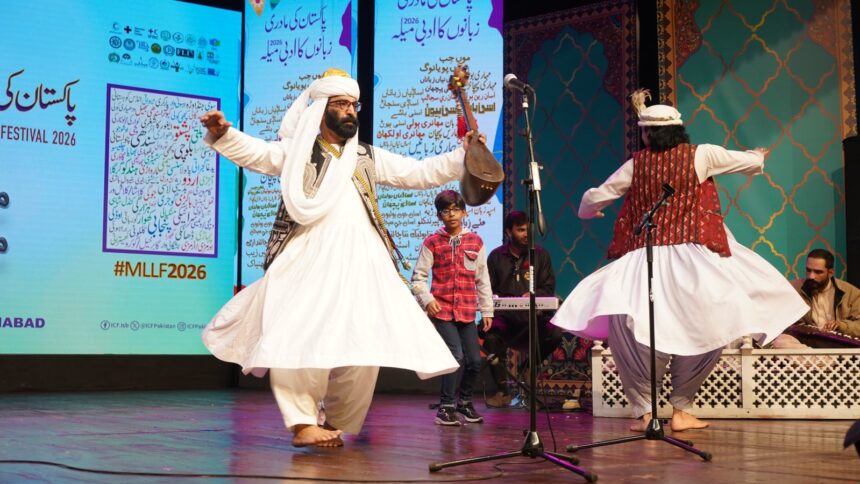
The Pakistan Mother Languages Literature Festival 2026 concluded at the Pakistan National Council of the Arts in Islamabad after three days of discussion, cultural programmes and scholarly presentations that stressed the urgent need to protect and promote mother languages across the country. Organised by the Indus Cultural Forum in collaboration with the PNCA, the event drew writers, academics, policymakers and community activists to explore concrete steps for expanding mother-tongue education and institutional support.
On the final day speakers pushed for translating dialogue into action, arguing that state policy must prioritise harmony instead of uniformity by recognising linguistic diversity as a national strength. Panels considered how public institutions, universities and grassroots organisations can strengthen the role of mother languages in governance, research and public awareness to make services more accessible and responsive to local communities.
Prominent participants included Member of the Khyber Pakhtunkhwa Assembly Nisar Baaz Khan, former federal minister and writer Madad Ali Sindhi, scholar Dr. Khadim Hussain and vice chancellors and academics such as Dr. Raza Bhatti, Dr. Madad Ali Shah, Maleeha Sattar, Dr. Ishaq Samejo, Dr. Sher Mehrani, Amjad Nazir, Warda Shahzadi and Hamza Ijaz, who underscored the link between language policy and social inclusion.
The session on the use of mother languages for public awareness showcased initiatives in legal literacy, agricultural extension and civic communication conducted in Sindhi, Pashto and Balochi, demonstrating improved outreach when communities are addressed in their native tongues. Experts also urged the creation of a language commission to assess the status of all languages in Pakistan and to recommend measures for recognising centuries-old indigenous languages and supporting their development.
Scholars presented research on Sindhi sociolinguistics, Khowar oral traditions, Gawarbati documentation, Kohistani rhetoric, Pahari and Pothohari literature, Seraiki literary history and Brahui studies, highlighting documentation, translation and digital archiving as immediate priorities for safeguarding linguistic heritage. The festival emphasised that academic work must be paired with community stewardship for lasting impact.
Discussions on folk literature and climate change illustrated how indigenous storytelling and music can communicate environmental knowledge and resilience, while a dedicated panel on women as creators and curators of folk traditions highlighted the central role of women in transmitting cultural memory and language to younger generations. The Ahmed Saleem Study Circle paid tribute to literary figures including Shaikh Ayaz, Fahmida Riaz, Mubarak Kazi and Syed Zahoor Hashmi, celebrating their contributions to Pakistan’s multilingual literature.
Naseer Memon, chairman of the Indus Cultural Forum, said celebrating linguistic diversity is a necessary response to cultural suffocation and stressed that language survival depends not only on government action but on ownership by speaker communities. The festival concluded with a musical evening that reflected Pakistan’s diverse linguistic traditions and acknowledged support from institutions including the Sindh Culture Department, Higher Education Commission, UNESCO, Sindhi Language Authority, Balochistan Culture Department, Punjab Institute of Language Art and Culture, Shaheed Benazir Bhutto University Shaheed Benazirabad, International Islamic University Islamabad, Pakistan Science Foundation and several civil society partners.