



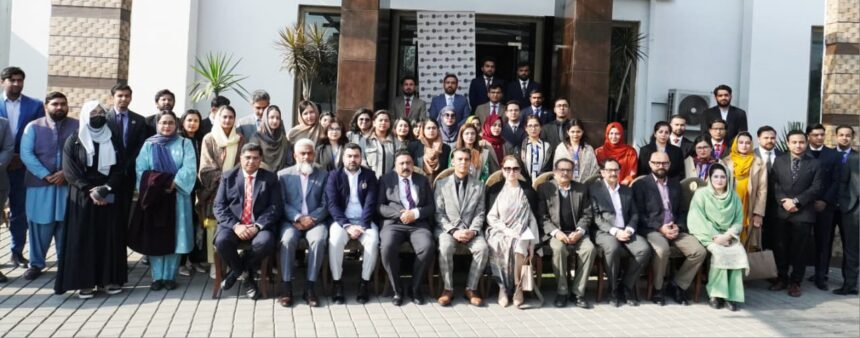
A post-COP30 seminar in Islamabad urged Pakistan to move beyond rhetoric and urgently strengthen preparation, coordination and institutional capacity to deliver tangible climate action ahead of COP31 in Türkiye. The event, organised by the Sustainable Development Policy Institute, brought together parliamentary leaders, climate officials and policy experts to assess Pakistan’s priorities after Belém.
Syed Naveed Qamar, chairman of the National Assembly Committee on Finance and Revenue, said climate change is not an academic debate but a present reality that the next generation of civil servants will confront now. He warned that Pakistan’s inability to convert global goodwill into projects stems from weak preparedness, noting that despite massive pledges after the 2022 floods the country secured only one major internationally backed project, the Sindh Housing Initiative, because the groundwork had been completed and transparency ensured.
Mr Qamar highlighted that implementation ultimately rests with civil servants and domestic institutions and urged a faster transition to clean transport, stronger provincial action and active preparations for COP31. He also cautioned that major economies enriched by fossil fuels are now setting restrictions that developing countries cannot follow, making an accelerated, just transition essential for Pakistan.
Dr Shezra Mansab Khan Kharal, Minister of State for Climate Change, described COP outcomes as increasingly non-binding and disappointing yet stressed that Pakistan must advance climate action within its own capacities. She called the newly submitted NDC 3.0 a robust document that will improve Pakistan’s standing in UNFCCC negotiations and noted Pakistan’s Climate Prosperity Plan presented in Belém as a model linking green growth with resilience.
Dr Mansab pointed to the rooftop solar revolution and growing provincial initiatives as signs that Pakistan can be a poster nation for renewable adoption. She regretted that last year’s push to operationalise the Loss and Damage Fund produced no substantial resources for Pakistan but said COP30 offered the Global South a renewed diplomatic platform.
Dr Abid Qaiyum Suleri of SDPI warned that technical ministries central to food security and agriculture are undervalued within the bureaucracy despite becoming vital for the country’s future. Citing the UNEP Emissions Gap Report and unusually warm winters, he said Pakistan is already seeing winter temperatures roughly four degrees above historical averages and that rising heat threatens food security, manufacturing productivity, livestock survival and social behaviour, with heatwaves linked to psychological distress and heightened public frustration.
Dr Suleri argued that the shift from Kyoto to Paris placed responsibilities on both developed and developing countries while promised financial support from rich nations has largely failed to materialise. He urged incentives for provincial climate action, the development of domestic best practices and a stronger domestic case rather than reliance on external finance.
Secretary Climate Change Aisha Humera Chaudhary described COP30 as a diplomatic win for the Global South and said Pakistan must clearly articulate its adaptation needs. She reminded attendees that two major floods cost the country about 10 percent of GDP and stressed the importance of the National Adaptation Plan, the Global Adaptation Goal framework and the global pledge to triple adaptation finance. She also advised highlighting provincial progress under the National Adaptation Plan and the National Clean Air Policy and scaling up youth-led climate startups ahead of COP31.
SDPI deputy director Dr Shafqat Munir Ahmed suggested building on COP30’s focus on nature by pushing to make COP31 a forum for water and debt issues, emphasizing the Himalayan cryosphere’s role in sustaining Pakistan’s rivers and economy. He urged Pakistan to press for a formal global mechanism to protect climate-vulnerable economies from debt spirals and unilateral trade measures as climate-induced disasters accelerate.
Speakers across the seminar repeatedly returned to the need for concrete climate action rooted in institutional readiness, provincial engagement and youth leadership, with clear technical preparation to leverage future international opportunities and to protect Pakistan’s food systems, livelihoods and social stability from escalating climate risks.