



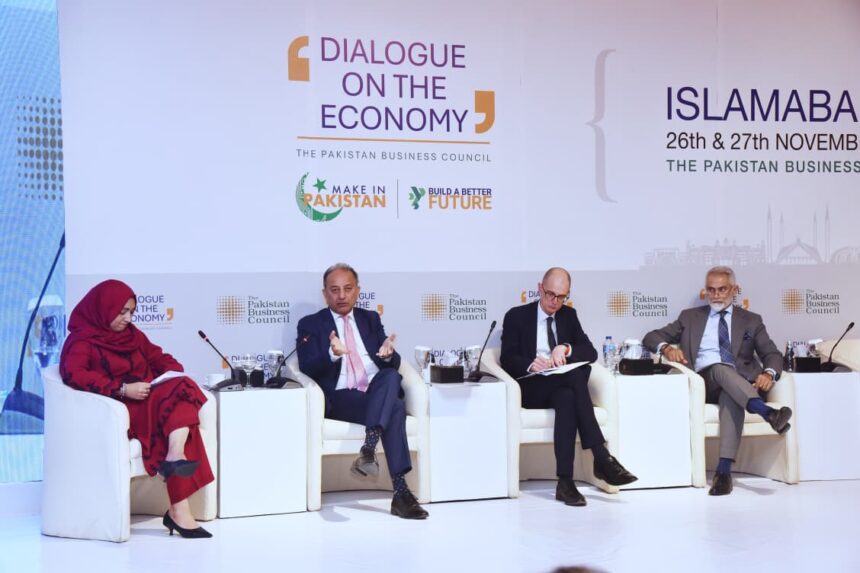
Federal Minister for Climate Change and Environmental Coordination Dr. Musadik Malik urged immediate action on Climate Resilience during a panel hosted by the Pakistan Business Council on the rising costs of delay. He warned that climate-induced disasters are inflicting severe human and economic tolls across Pakistan and stressed that responses must move beyond simple damage accounting to address lives, disability and social stability.
Dr. Malik highlighted stark human losses from recent events, noting that approximately 4,700 lives were lost in the last four major floods, while nearly 18,000 people were injured or permanently disabled and more than 3 million citizens were displaced from their homes. These figures, he said, demonstrate why Climate Resilience must be a national priority.
The minister pointed out that the price of climate change is not only humanitarian but economic, estimating that Pakistan loses around 9.5% of GDP each year to flood-related direct damages and broader economic disruption. He argued for accelerated investments and policy measures that strengthen infrastructure, protect livelihoods and reduce long-term fiscal exposure.
Geography compounds the challenge: Pakistan sits at the foothills of the Himalayas and faces accelerating glacial melt that is already shifting rainfall patterns and altering river and canal flows. Dr. Malik warned these hydrological changes will significantly compromise food security unless adaptive measures are rapidly implemented to bolster agricultural resilience and water management.
On global responsibility, the minister underscored emissions inequity, noting Pakistan contributes less than 1% of global greenhouse gases while two neighbouring countries account for nearly 40% and ten countries together are responsible for more than 70% of emissions. He called for greater international cooperation and climate finance that recognises vulnerability and historical emissions differences as central to building Climate Resilience in Pakistan.
Also participating in the panel were Mr. Sam Waldock, Development Director at the British High Commission, and Mr. Syed Jamal Baquar, CEO of TPL REIT Management Company, who joined the discussion on financing, partnerships and practical steps to reduce risk. The minister’s remarks aimed to sharpen the focus on urgent action, policy reforms and the mobilization of resources to protect communities and the economy from recurring climate shocks.