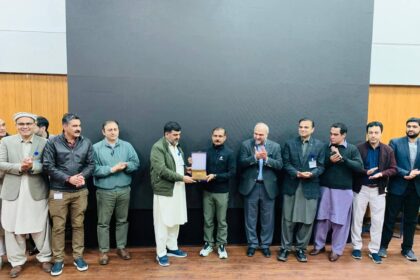




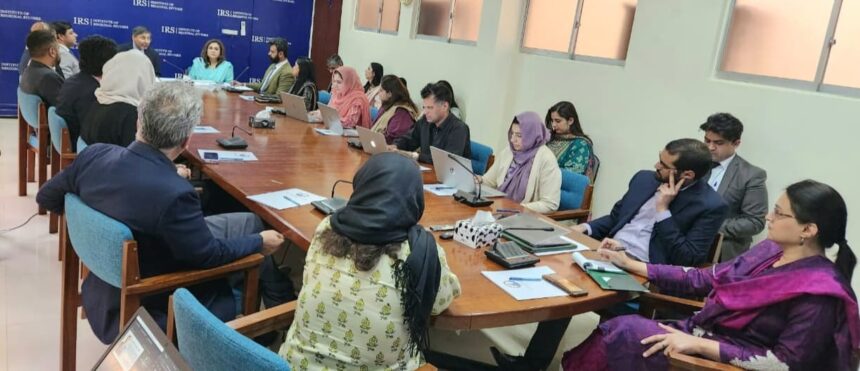
The Institute of Regional Studies in Islamabad convened an Eminent Talk featuring Senator Zarqa Suharwardy Taimur as a pre-COP31 dialogue focused on strengthening climate governance in Pakistan. The discussion brought together policymakers, researchers and practitioners to examine institutional reforms, legislative priorities and gaps in implementation across the country.
Amb Jauhar Saleem, President of IRS, opened the session by stressing the unprecedented scale of current warming, noting global temperatures are now as warm as at any point in the last 125,000 years. He warned that if the current trajectory continues, Pakistan will face mounting risks to ecosystems, food security and broader stability.
Senator Zarqa Suharwardy Taimur reflected on a fragmented policy landscape in which contradictory decisions often undermine long-term carbon markets and climate adaptation efforts. She pointed out that while Pakistan participates in international negotiations and receives climate finance, persistent structural weaknesses and limited empowerment of local governments frequently stall effective action at the grassroots level.
Dr. Zarqa argued that meaningful climate justice depends on robust district-level governance, drawing on recent flood experiences to illustrate failures in planning and enforcement. She highlighted how unregulated urban expansion along riverbeds intensified vulnerability, disproportionately affecting women and persons with disabilities, and called for urgent changes in agricultural and water-use practices in a country already under severe water stress.
Talha Tufail Bhatti, lead of the Climate Governance & Policy Program at IRS, warned that political polarization and declining trust in institutions risk shortening policy horizons. He urged a shift in mindset from inadvertent environmental harm to deliberate stewardship of natural resources so that climate governance outlasts electoral cycles and delivers sustainable outcomes.
Speakers at the event emphasized actionable steps for Pakistan to strengthen climate governance, including clearer legal frameworks, empowered district administrations, improved urban planning to prevent development on flood-prone riverbeds, and targeted support for vulnerable communities. As the country prepares for COP31, participants called for aligning national priorities with local implementation so that climate governance delivers measurable resilience and justice across Pakistan.