




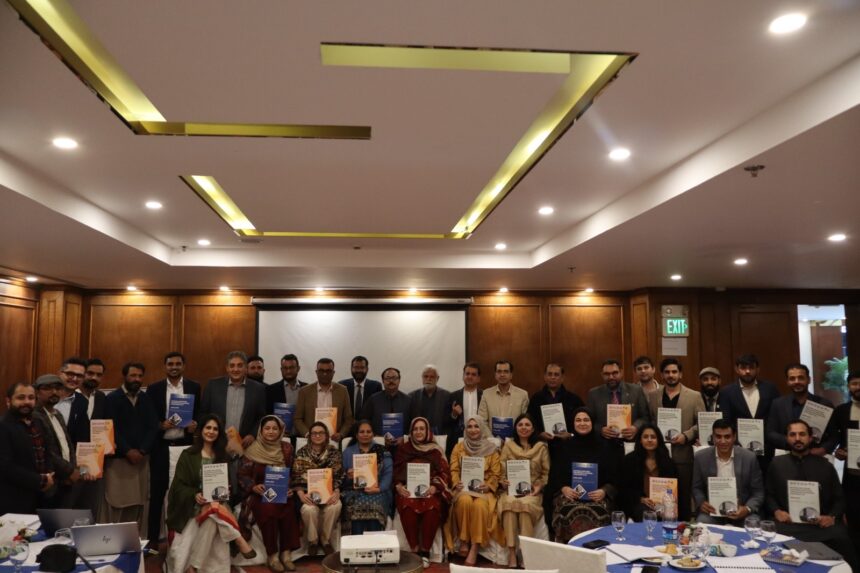
The National Institutes of Health and the Ministry of National Health Services, Regulations & Coordination formally released documents that mark a significant advance for infection prevention and control and HAI surveillance across Pakistan, placing the National IPC agenda on a structured national footing.
Published at the ceremony were three landmark documents: the National IPC Strategic Plan 2025–2030, the National HAI Surveillance and Response Strategic Plan 2025–2030 and the National HAI Surveillance and Response Implementation Guidelines 2025, which together set a clear timeline and framework for action.
The event brought together senior officials from MoNHSR&C and NIH, the National IPC Focal Person, Provincial IPC Focal Persons, subject matter experts and development partners. Attendees recognised the launch as a major milestone that moves National IPC and HAI surveillance from policy vision to a nationally owned, time-bound programme for safer clinical care.
Leadership from MoNHSR&C and NIH praised the C19RM project team and the NIH IPC team for their dedication, technical rigour and perseverance in developing the documents. Warm acknowledgement was also extended to national and provincial experts and partner organisations who contributed throughout drafting and review to ensure the outputs are evidence-based, context-appropriate and aligned with global best practice.
Stakeholders collectively reaffirmed their commitment to full implementation of the strategies and guidelines, including regular monitoring and periodic review of progress. The shared goal is to achieve the objectives for IPC and HAI surveillance by 2030, strengthening patient safety and quality of care across Pakistan.
With these documents now formally disseminated, the National IPC agenda has a clear roadmap for implementation, enhanced HAI surveillance systems and a renewed focus on protecting every patient through improved infection control measures.